
GAS: The Charvel Dinky 24 MJ in Carribean Burst
Gear Acquisition Syndrome has struck again. This time, I added a MJ Charvel Dinky 24 to the stable, and boy, is she a sweet player.

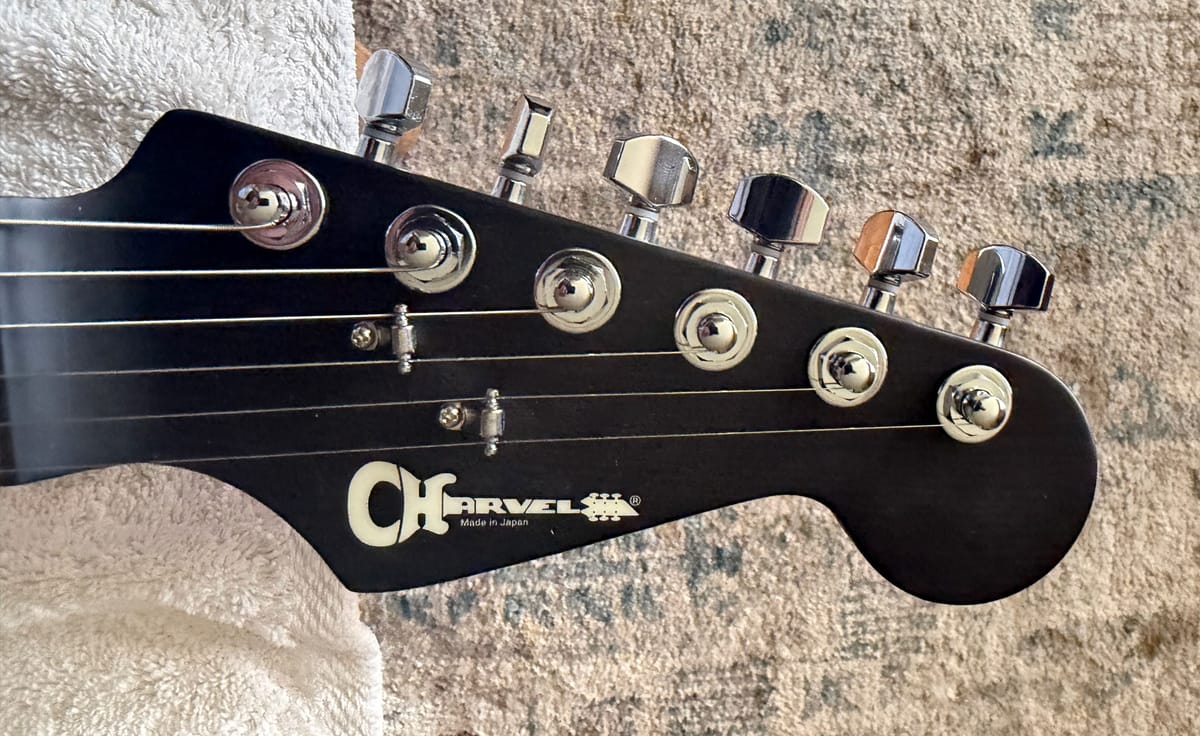
Note: This is the "Guitars and Gear" newsletter. I post here mostly about my addiction to guitars and the accessories (amps, effects, etc) that drive that passion. I know most of my readers aren't into this indulgence of mine.
To remove yourself from this list, there is an "unsubscribe" link at the bottom of the email, and that will navigate you to the web page, and turn it off. Please do that if this sort of post isn't your cup o' joe. I get it, and I promise, I will not be offended.
I seem to have a Britney Spears song in my head: Oops, I did it again.
Anyhow, I was reading about a limited run of guitars (ok, not as limited as that 50 unit collectors edition Michael Schenker Flying V) going back to the roots for Charvel, made in Japan.
Charvel is the last name of one of the innovators of the 1980's metal scene, Wayne Charvel, who started by selling bodies and necks to some of the rising stars of that era. In fact, Eddie's "Frankenstrat" had seconds (b-stock) neck and body from Wayne's shop. Cool bit of trivia!
Anyhow, by the mid 1980's he went into business building complete guitars, this thing called a "Super Strat". The iconic Fender Stratocaster shape, but with better playability, hotter electronics (humbuckers), and Floyd Rose tremolos that all the cool kids were playing in that era. That brought to light that Mr. Charvel wasn't that good of a businessman, so he partnered with Jackson, and by 1986, they had contracted the build of these guitars to Jackson's plant in Japan.
It was 1987 when I fell in love with a Charvel Model 4, in glossy black, with a Kahler tremolo, and the smoothest, fastest neck I have ever played. I think it set me back $650 in that era, and home I went with it. To say that it was a boon to my playing would be a massive understatement.
I literally played that thing to death, finally selling it when we moved away from Tucson in 2012 for $50 to someone who did a fret job on it and still plays it to this day.
My second Charvel
Although I had other guitars (great ones) by the time I sold that Model 4, I still missed that neck, and the feel.
Near the beginning of Covid, I bought a lightly used Charvel Pro-mod So-Cal Style 1, in Robin's Egg Blue, and it is a killer guitar. It has the neck, but now reinforced with carbon fiber, it is far more stable. It came with hot Seymour Duncan pickups, and it sounds louder than the guitar I have with EMG active pickups in it. It is a beast. But, now owned by Fender, it was made in their Mexico plant.
Don't get me wrong. The MIM (Made in Mexico) Fenders are amazing guitars, with great components, at a reasonable price. Just pick up a Player II Strat or Tele, and it will feel good.
But when Fender – who has long had a modest sized plant in Japan[1] – announced that they would be building some of the Charvel line in their Japanese factory, I got excited.
Meet the Charvel Dinky 24 MJ
Ok, some nomenclature. Dinky is the body style. It dates back to the era where Charvel was selling parts. 24 is the number of frets. Until fairly recently, most guitars had 22 frets, and in fact, until I started buying Harley Benton guitars, I only had 22 fret guitars. Not a big deal for me.
Look, I have shortish, sausage fingers, so the high frets are not something I am good at or comfortable playing. 19 or 20 is as high as I usually go to. The extra two frets isn't a feature for me.
But the body shape isn't exactly a Fender Strat, the top has less rounded edges, and the back has a bigger belly cutout. The arms are a little thinner in width, and instead of a heel plate, the 4-bolts are through a contoured body.
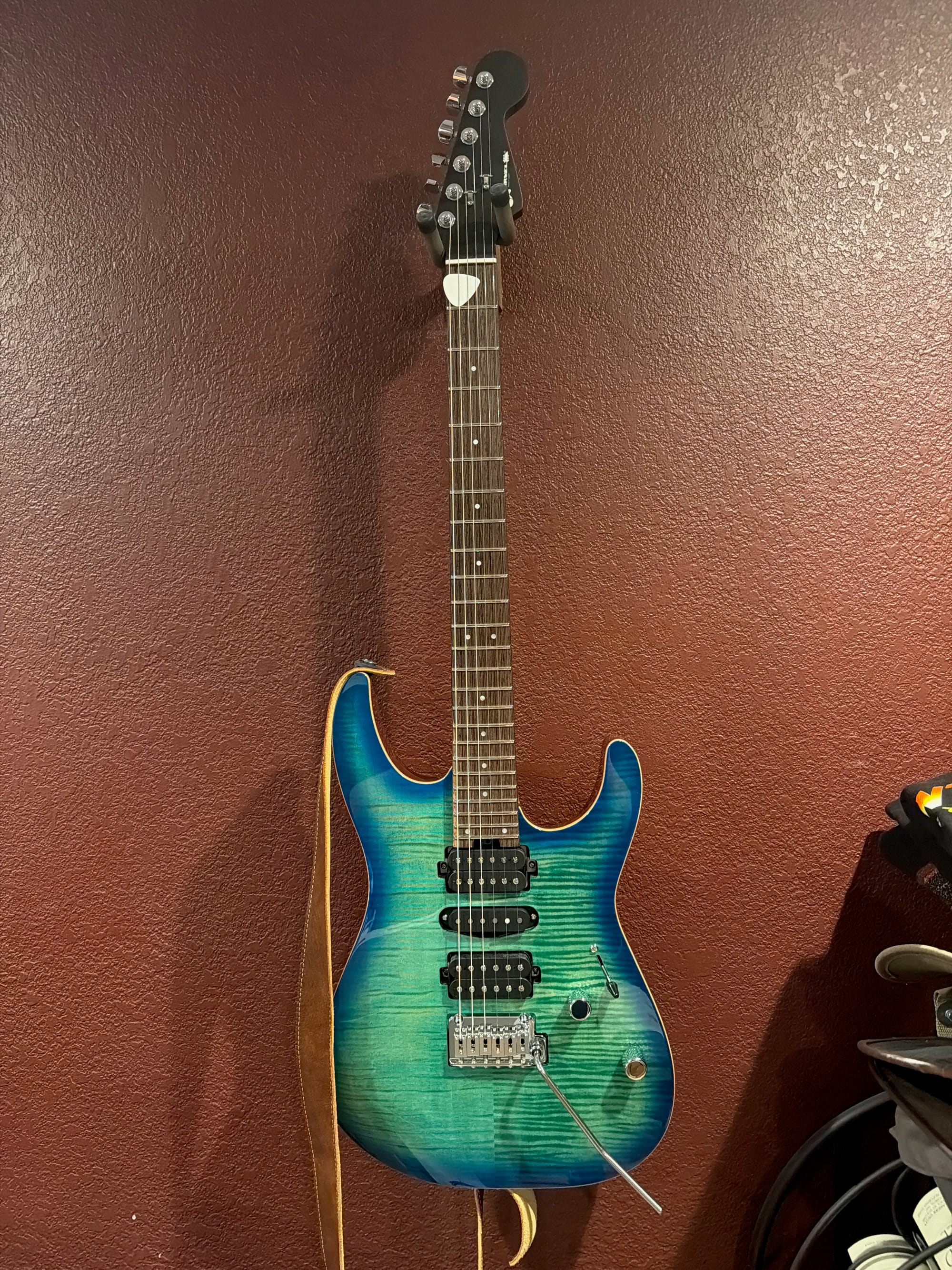
This gives really good access to those upper frets that my sausage-like fingers can't really use anyway.
The top is a flamed maple veneer on a maple cap, that is roughly 3mm thick. This is overlaid on a mahogany back (3 piece) that is unstained. The finish is a high-gloss well-buffed to a shine that is spectacular.
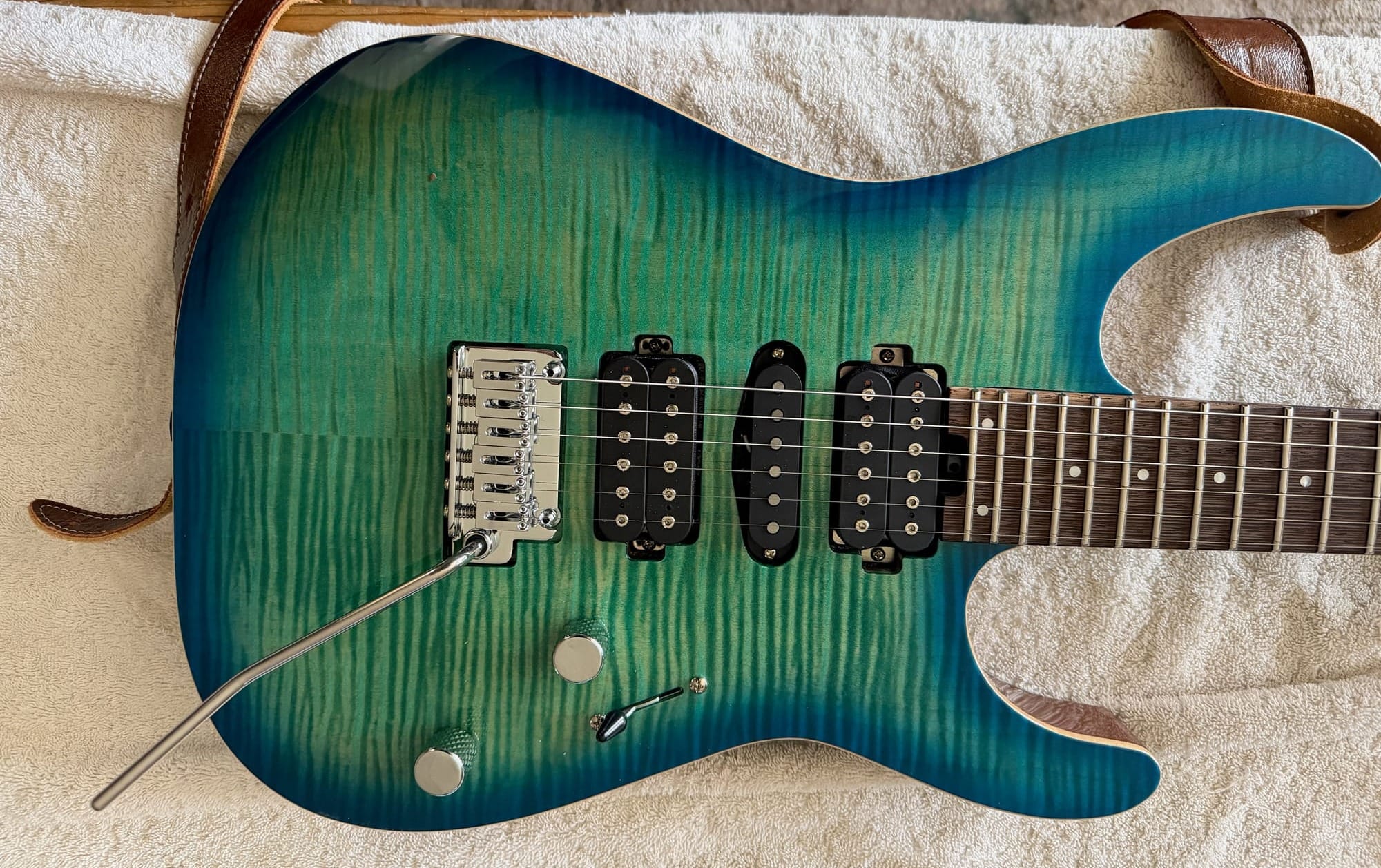
The tremolo is the outstanding Japanese made Gotoh 510, and it is strung with 9 gauge strings. The back is routed on the tremolo so it can be pulled up as well as the usual vintage warble. It is buttery smooth, and it is rock solid in tuning. The setup out of the box (as arrived) was perfect. The action is low, there are no dead frets or buzzes, and it had perfect intonation. No surprise, the Japanese made Fenders are impeccable, and this is no different.
The rest of the hardware is impressive. A Tusq nut, and locing tuners help the tuning stability immensely. I've had this about a month, and have played it at least an hour each day, and nothing more than minor tuning has been needed.
The wiring is probably the cleanest I have ever seen. I pulled the back cover off and marveled at the clean wiring. If you've looked at a modern Strat (Fender, made in Mexico) they look like a drunken monkey wired it, and dribbled solder over things. This looks like someone who took pride in their work put it together:
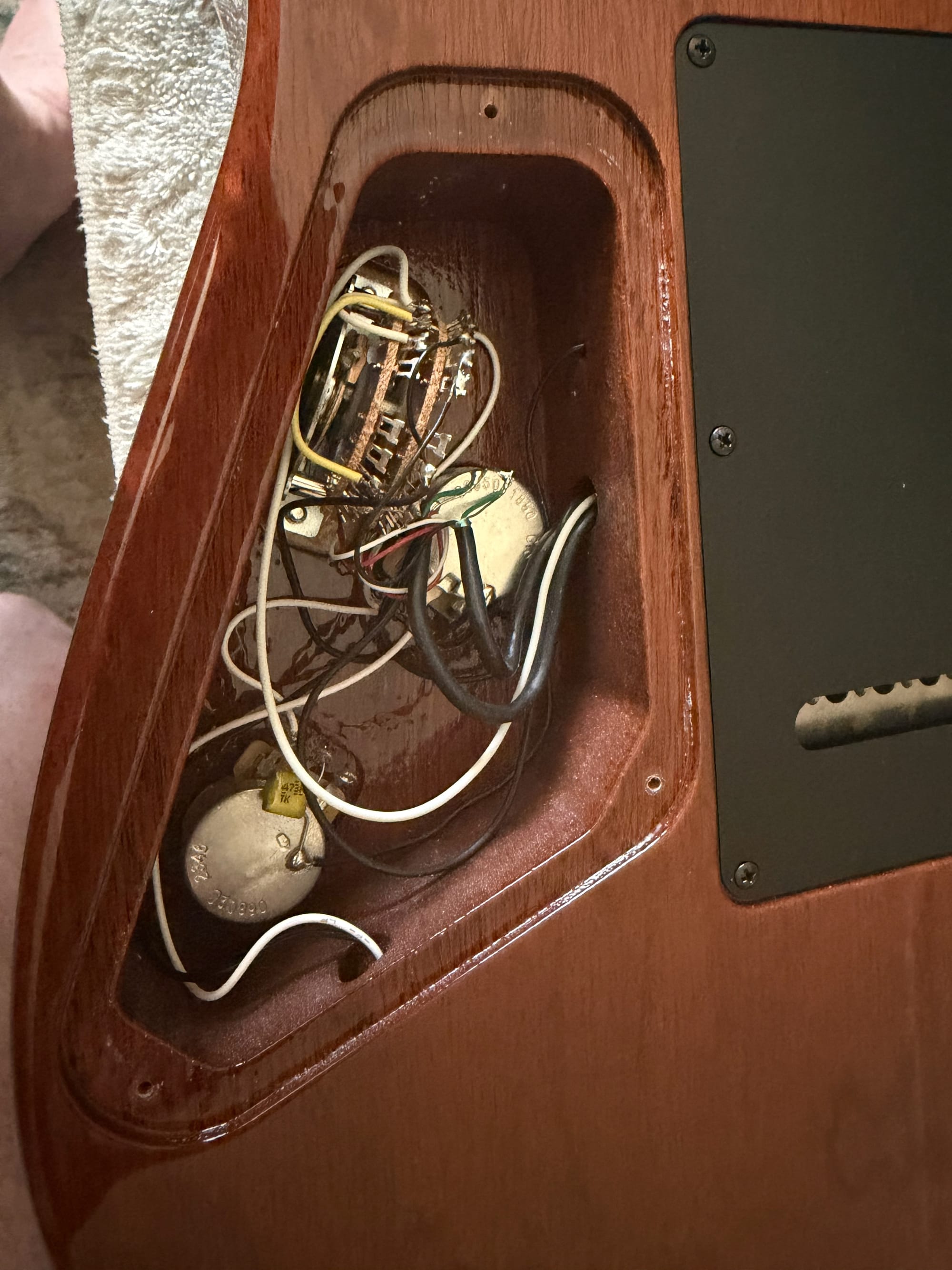
Seriously, that is clean. The pots are smooth and feel like high dollar parts, not the rejects from a closeout sale at Radio Shack. The tone pot has a bypass, a Charvel staple that means at the full "on" it is a straight-through, no coloring of the tone. This is the go-to for that high-gain crunch-y metal tone. Love it.
But, this is not a dedicated single use guitar, it has three pickups, a humbucker in the bridge and the neck, with a single coil in the center. This gives a ton of tonal options. Roll off the volume with a high-gain dialed up on the amp, and you get this honk that is fun. Or in position 2 (the switch has 5 positions) you can get a gnarly blues tone with an amp that is at the edge of breakup.
Or, if you are doing a soulful solo, slam the switch to position 5, and get that full neck humbucker goodness. So much variety, all out of the box.
The pickups are medium-high output Seymour Duncans (slightly less output than the S-D's on my ProMod Charvel), and super versatile. They are quiet, and sound amazing. No temptation to replace them.
But, I am saving the best for last.
The one thing that Charvel's are known for is their necks. They are thin, giving the player a profile that is built for shredding. They are close to the iconic Ibanaz "Wizard" necks that are the staples of the Steve Vai's and the Joe Satriani's of the world.
That is coupled with a compound fretboard radius, 12" at the nut, and 16" at the 24th fret, this makes for comfortable fretting across the board.
But that doesn't make this wild. It is the wood. Most necks are made from quarter sawn Maple, that very pale, blond wood. This model comes with a neck made from Wenge, an African hardwood, it has wild grain structure and is nearly black.
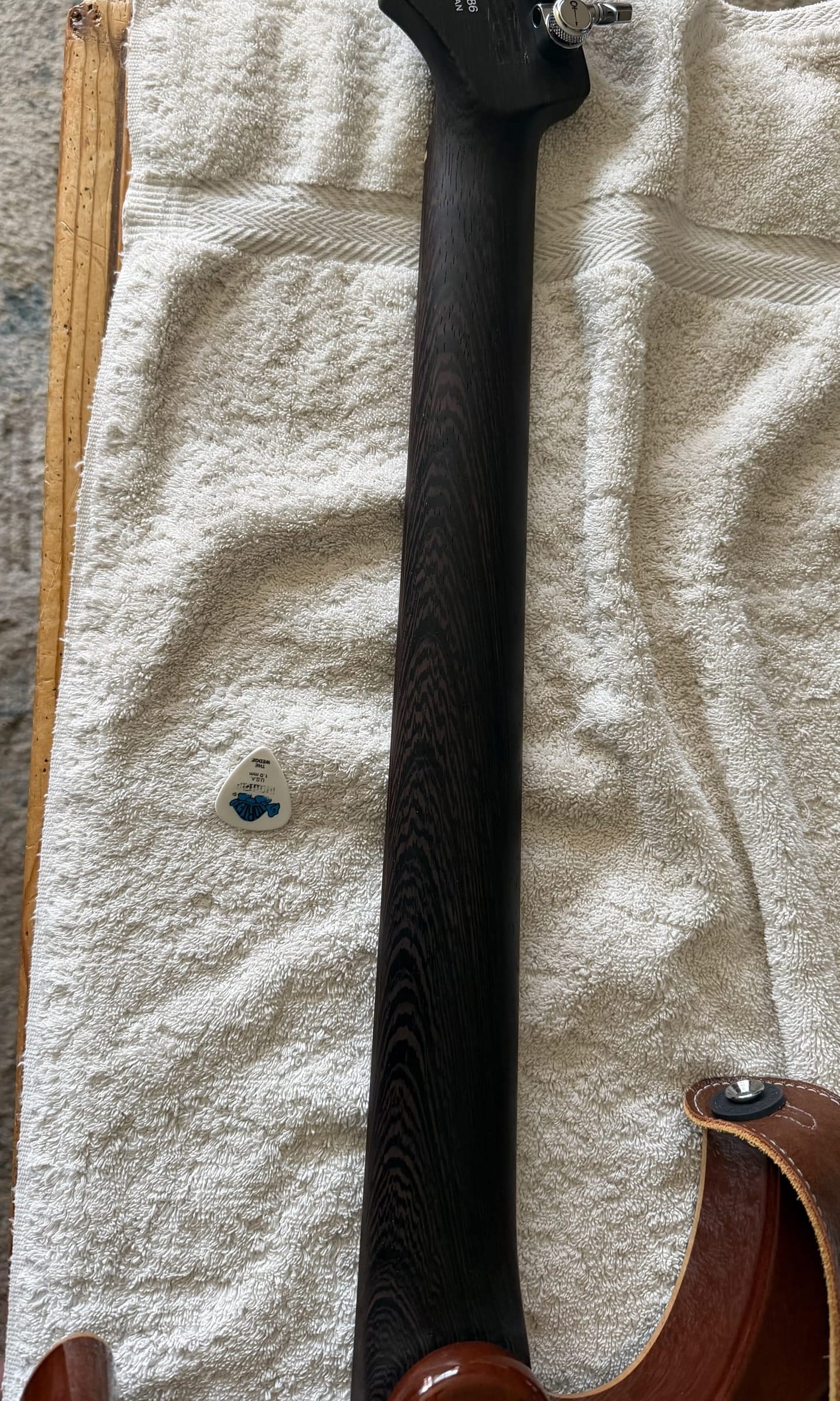
Very distinctive, and the grain and the pores on the wood give it a very unique feel. Very comfortable. It is finished in the usual hand-rubbed oil that is a dream to slide your hand up and down the neck.
Summary
I didn't need this guitar, but I bought it slightly used, saved a couple hundred bucks, and it looks gorgeous on my wall, and frankly, like that Ferarri in Ferris Bueller's Day Off, if you have the means, I highly recommend it.
Is it worth the asking price ($2,309 as of writing this)? No. There are plenty of great guitars for less than half that price. But if a fine piece of workmanship is something you value, and you've never owned a guitar made in Japan before, I can recommend this as a great entry into that realm.
I was going to say something about my 1987 Charvel Model 4, made in Japan being about $600, and how I wouldn't have spent $2300. But alas, with inflation since then, that would be $2,379 today, so yes, this is about the same price in today's dollars as I spent back then.
The difference is that back then, cheaper guitars sucked. Today, there is a smorgasboard of outstanding sub $500 (in today dollars) on the wall.
This does feel like a splurge, but if I get 30 year out of it like my first Charvel, it will be a steal.
Thanks for reading and allowing me to share my gear addiction.
1 - in the CBS era, the quality of the US made guitars was, uh, hit or miss. Fender partnered with a Japanese musical instrument company to make some "MIJ" Strats that were phenomenal, and those are highly sought after collector's items to this day