The Franchise: How Mississippi's Spy Agency Got Copied Statewide
Mississippi built a taxpayer-funded spy agency to crush the civil rights movement, then watched Louisiana and Alabama copy the homework. Georgia skipped the espionage and just staged a fake listening tour instead. Same con, three costumes.

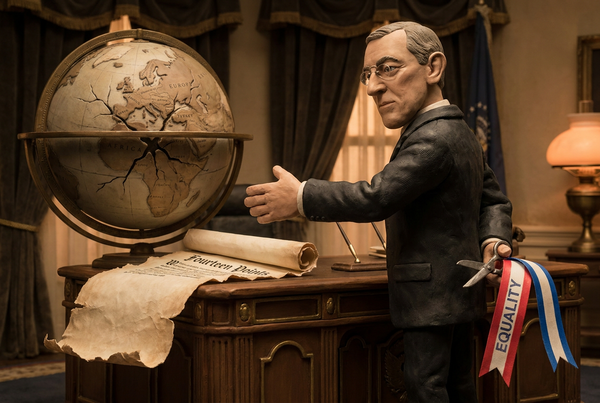
Wilson's trick was doing the damage through appointees and vocabulary, keeping just enough daylight between himself and the outcome that historians are still arguing about how much he personally ordered. Mississippi, thirty years later, didn't bother with the daylight. There was no ambiguity about who built this machine, what it was for, or what it did. The state legislature created it, funded it, named it after the exact constitutional theory it existed to weaponize, and then watched three other states rip off the design almost line for line. If Wilson is the case study in plausible deniability, Mississippi is the case study in what happens once a state just stops giving a damn about being deniable. It's worth understanding on its own before we get to who else bought the franchise rights.
The Flagship
The Mississippi State Sovereignty Commission was created by the state legislature in 1956, two years after Brown v. Board, with an explicit mandate to protect the state's sovereignty from federal encroachment. It started, by most accounts, as something close to a PR shop, polishing Mississippi's image and grousing about unflattering national coverage. It did not stay that way for long. Over roughly two decades it evolved into a full domestic intelligence operation, running investigators and paid informants into the NAACP, CORE, and SNCC, and stacking up files on more than 87,000 people the state considered involved in, or merely suspected of sympathizing with, the civil rights movement. It had actual police powers: subpoena authority, investigative reach into private citizens, the ability to compel testimony. A state agency built like a mini-FBI and pointed at one target: people who wanted Black Mississippians to vote.
The tactics get uglier the closer you look, and "ugly" is doing some heavy lifting there. The Commission didn't just watch, it actively wrecked lives. Clyde Kennard, a Black Korean War veteran who tried to enroll at what's now the University of Southern Mississippi, had evidence planted against him with Commission involvement and got railroaded on a bullshit chicken-feed theft charge, serving seven years for it. When Byron De La Beckwith stood trial a second time for assassinating Medgar Evers in 1964, a Commission investigator named Andy Hopkins handed Beckwith's defense team background dirt on the jury pool, meaning the state's own segregation-intelligence apparatus was quietly doing opposition research for the defense of the man who murdered one of its most prominent opponents. Between 1960 and 1964 the Commission secretly funneled $190,000 in state money to the White Citizens' Councils, the ostensibly private segregationist groups that supplied the ground-level muscle, the firings, the evictions, the boycotts, all running off intelligence the Commission's files supplied.
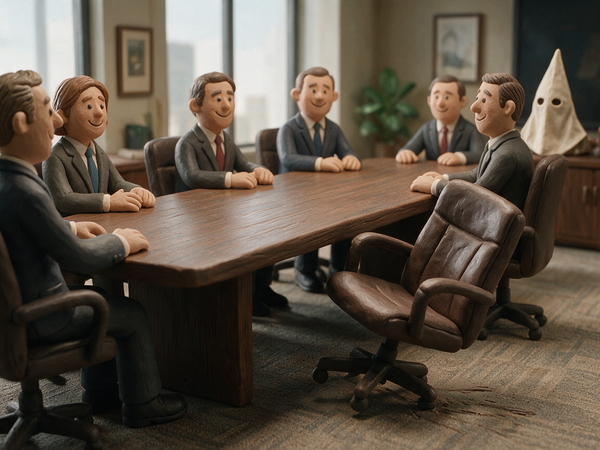
Then there's the informant network, and this is the part of the story that refuses to sit still inside a clean good-guys-bad-guys frame. The Commission recruited Black informants, some of them respected figures inside the movement itself, to report on strategy and leadership from the inside. One of them, working under cover of a private detective agency, sat in on the Ohio training session where Freedom Summer volunteers were being briefed before heading south, and passed along the movements of James Chaney, Andrew Goodman, and Michael Schwerner. All three were murdered by Klansmen within their first weeks in Mississippi, in a conspiracy that included a sheriff's deputy. Nobody's claiming the Commission ordered the killings. It didn't have to. It had spent years building exactly the kind of pipeline into local law enforcement, an agency the documentary record describes as riddled with Klan membership, that made this outcome close to a foregone conclusion the moment the Commission decided three student activists were worth tracking.
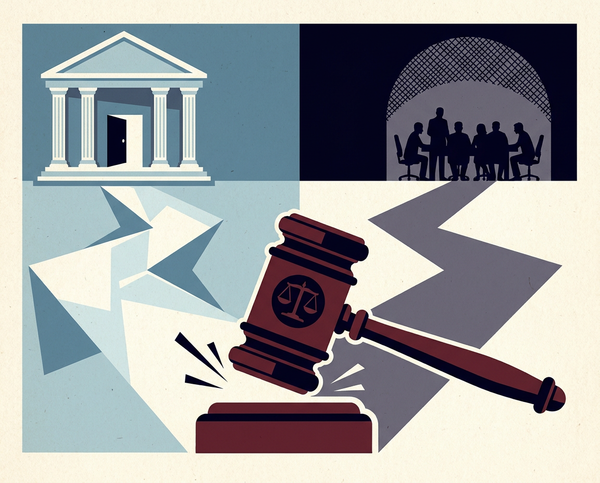
The records were sealed by statute for fifty years after the Commission's 1977 dissolution, meant to stay locked up until 2027. On paper. The ACLU sued almost immediately, and after roughly a decade of grinding litigation a federal judge ordered the non-litigation files released; legal wrangling delayed actual public access until March 1998, with more tranches following into the early 2000s. The fifty-year seal was the legislature's last act of institutional ass-covering, and it lasted barely two decades before a lawsuit blew it open, a smaller, tidier rerun of the exact Wilson pattern: do the damage quietly, try to bury the paperwork for a generation, get overruled by a judge who didn't get the memo.
The Franchisees
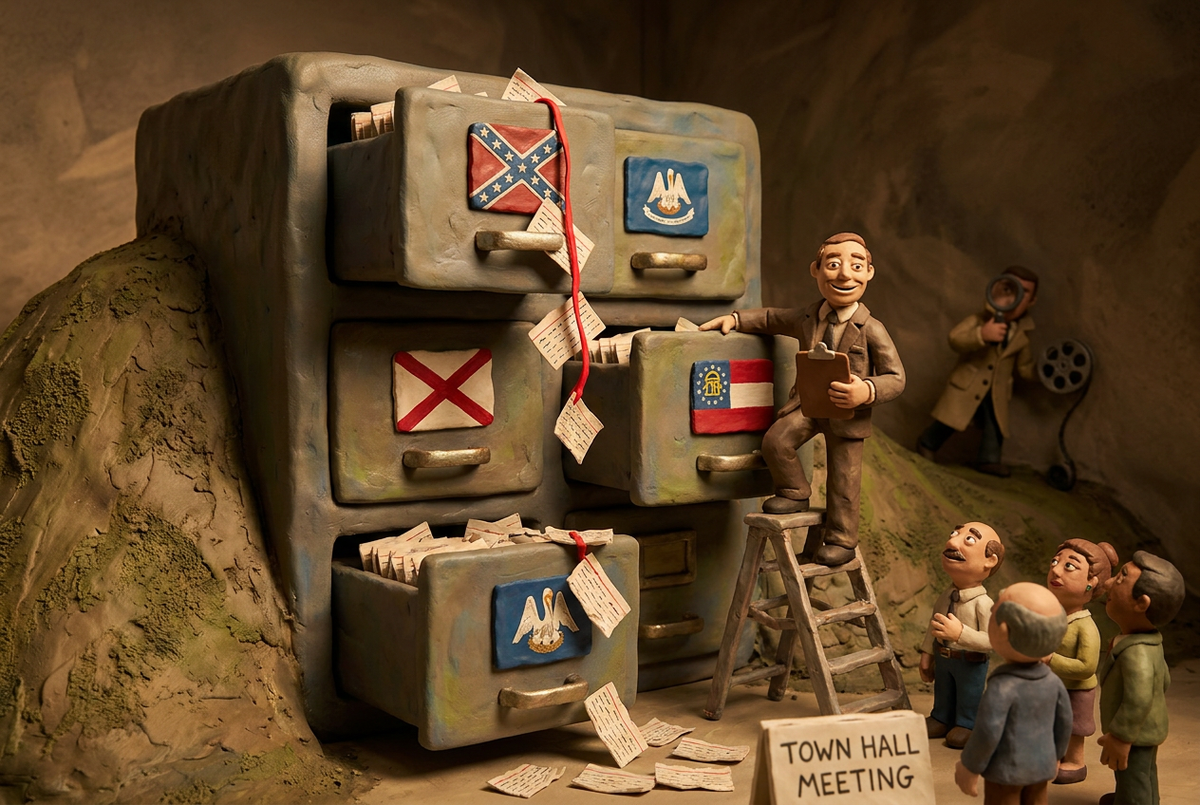
What makes Mississippi worth its own piece, rather than a grim footnote, is how fast and how deliberately the model got franchised. This wasn't parallel invention, three states independently stumbling into the same idea. Louisiana and Alabama built their own sovereignty commissions explicitly modeled on Mississippi's, right down to the name.
Louisiana stood up its State Sovereignty Commission in 1960 under Governor Jimmie Davis, headquartered in Baton Rouge, built on warnings about "creeping federalism" and dedicated to fighting school integration. Louisiana's version came with a bonus feature: it worked hand in glove with the Louisiana Joint Legislative Committee on Un-American Activities, explicitly welding the segregationist mission onto the era's anti-communist infrastructure. That's a genuinely useful detail if you want to understand how these agencies sold themselves to a wider public: segregation resistance dressed up in the more respectable clothes of anti-communism, borrowing the same "outside agitators" and "subversive influence" vocabulary McCarthyism had already made palatable at dinner tables.
Alabama followed in 1963, also explicitly modeled on Mississippi's outfit, also doubling as an intelligence network keeping files on activists. Alabama's version threw in a little propaganda filmmaking for good measure, producing a documentary about the Selma march that a later Montgomery Advertiser reporter described as a "bizarre and offensive mix of conspiracy theories, endless crowd shots and racist caricatures of prominent civil rights leaders, including Rev. Martin Luther King Jr." Sit with that for a second: a state government commissioning and distributing a propaganda film mocking the people it was simultaneously spying on, using the same apparatus for both jobs. Not a rogue employee freelancing. Official state output, funded and blessed.
The Soft-Power Alternative
Georgia took a different road, worth including because it's the same goal pursued through Wilson's preferred method instead of Mississippi's. The Sibley Commission, convened in 1960 after a federal judge ruled Atlanta's segregated schools unconstitutional, wasn't a spy agency at all. It was a study committee, ostensibly gathering public input on how the state should respond to court-ordered desegregation. It toured all ten of Georgia's congressional districts and took testimony from roughly 1,800 witnesses, the overwhelming majority of whom preferred segregation even if it meant shutting the public schools down entirely.
The Sibley Commission never surveilled a single person. Never planted evidence, never fed a murder defense team a jury list. What it did was stage the appearance of democratic deliberation, hearings, testimony, the whole civic pageant of a state supposedly listening to its citizens, in service of a conclusion nobody serious ever doubted going in. It's the same Wilson move wearing a different suit: instead of quiet appointees moving policy while the boss stays clean, it's public process manufacturing the illusion of consent for an outcome the process was rigged to produce from the start. Mississippi built a machine that ran in the dark and got caught. Georgia built one that ran in broad daylight and called it listening.
What the Franchise Model Actually Tells You
Line up all four states and you get a more interesting pattern than "the South was uniformly racist," which nobody needed a taxpayer-funded spy agency to explain to them. What you actually get is a menu of institutional strategies for the identical goal, each one calibrated to a different tolerance for getting caught: Mississippi's blunt, no-apologies surveillance state; Louisiana's version laundered through Cold War respectability; Alabama's with a side of state-sponsored propaganda; Georgia's total inversion, achieving the same result through the theater of process instead of the machinery of espionage. States didn't need a shared memo to converge on the same solution. The incentive structure alone was enough to produce near-identical institutions, the same way competitors land on similar products without ever colluding. That's the actual case for calling this a franchise: not that Mississippi handed anyone a manual, but that once every state is building an apparatus to fight the exact same federal pressure with the exact same toolbox of law, money, and political will, you end up with regional flavors of one design, not four unrelated inventions.
Next up: the man who ran two Louisiana parishes like a personal fiefdom for decades and said the quiet part louder than anyone else in this series so far, no commission required. Leander Perez didn't need to build one of these things.
He just was one.
This is Part 2 of The Backlash Machine, a series tracing a hundred-plus years of the same recurring move: American institutions, progressive and reactionary alike, managing racial hierarchy through mechanisms diffuse and technocratic enough that nobody involved ever quite has to say the quiet part. Part 1, on Woodrow Wilson, is here. Segregation academies, the religious right, and a lot more are coming.
Like what you've read, but not able to switch to paid? Why not buy me a coffee instead! All money goes to help defray the expense of running the site.