This Fucking Guy: Leander Perez
Wilson hid behind appointees. Mississippi hid behind file cabinets. Leander Perez didn't hide behind anything, he ran two Louisiana parishes like a personal kingdom, built a snake-infested prison out of spite, and got excommunicated for being too much even for the Catholic Church.

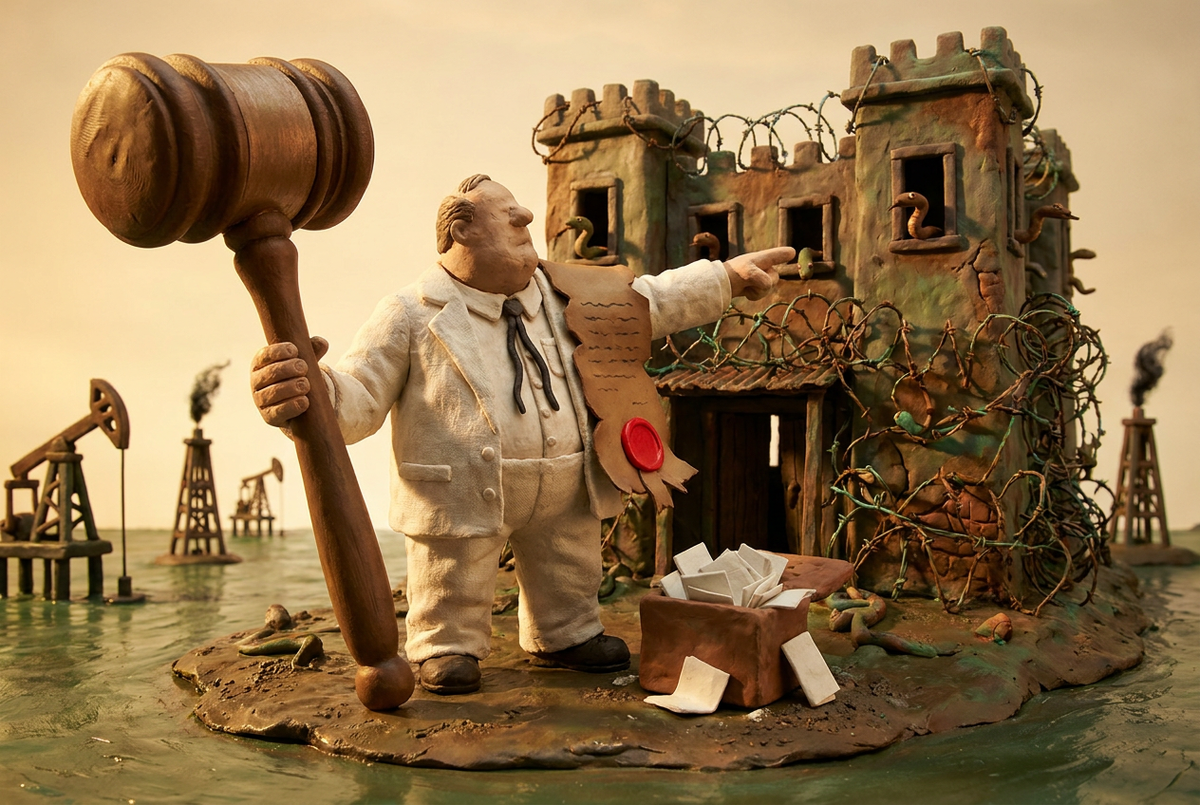
We teased this asshole at the end of Part 2 for a reason. Louisiana and Alabama had to build whole state agencies to do what Leander Perez did out of one parish courthouse with nothing but a law degree, an oil lease, and a truly staggering amount of spite. Turns out you don't need a Sovereignty Commission if you are one. Perez literally researched and wrote much of the legislation for Louisiana's Joint Legislative Committee on Segregation, the same body we mentioned working hand in glove with the state's sovereignty commission in Part 2. He wasn't adjacent to the machine. He was drafting its paperwork in his spare time, in between running an entire parish like it was his personal plantation, which, functionally, it was.
The Kid Who Learned From the Best Worst Guy in Louisiana
Perez graduated Tulane Law in 1914, made district judge by 1919, and landed the district attorney's job for the 25th Judicial District in 1924, a chair he'd hold, one way or another, for the rest of his goddamn life. His political education came courtesy of Huey Long, for whom Perez served as defense counsel during Long's impeachment fight in the 1920s. He took that alliance and built himself a kingdom: total, unchallenged control over Plaquemines Parish, later extended into St. Bernard Parish, running on a patronage machine funded by oil and sulfur lease revenue that made him personally worth tens of millions of dollars.
Nobody handed him that money. He took it, using the same office that was supposedly there to serve the public he was busy disenfranchising. Falsified voting records, intimidated voters, prevented the overwhelming majority of Black residents from voting at all, and ran parish elections that came back so lopsided the numbers themselves are basically a confession. That's not landslide popularity. That's a man who controlled the count.
Sidebar: for a man whose salary was never more than $7,000 per year, he amassed a pretty large fortune through his graft and fraud.
The Snake Dungeon
This is the part of the story that would be funny if it weren't so genuinely deranged. In 1964, with civil rights organizers moving through the South, Perez strung barbed wire around Fort St. Philip, a long-abandoned, snake-infested nineteenth-century military outpost, and publicly announced he'd throw any "outside agitators" who dared enter his parish into it.
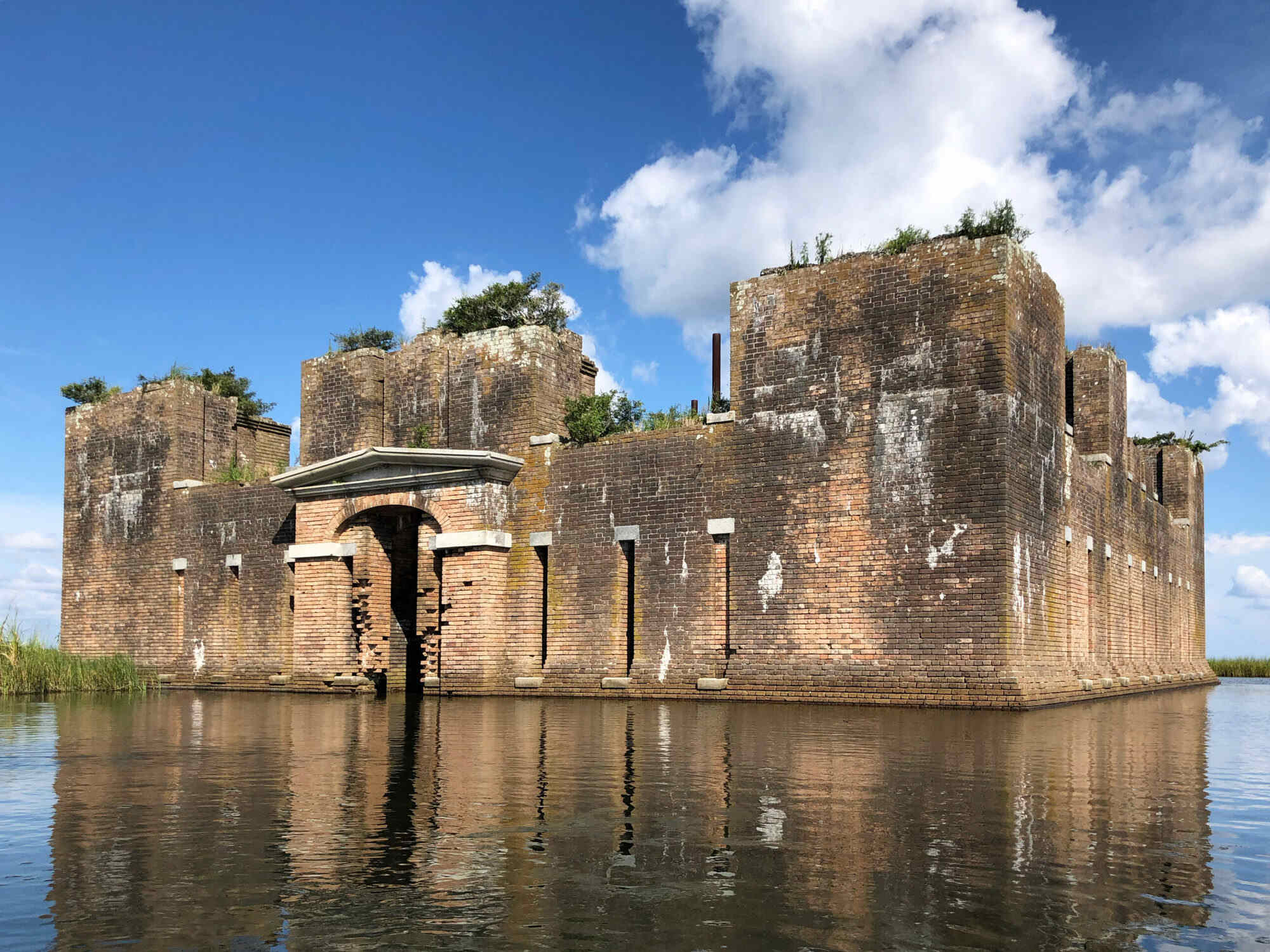
Nobody came. The prison sat there, unused, a several-hundred-year-old fort full of snakes that one grown man had personally weaponized out of pure malice, and he never got to use it. If you need a mental image for what unchecked local power with too much free time and too much money looks like, it's a sitting public official building a dungeon on spec and just leaving it there, waiting, like some kind of segregationist Chekhov's gun that never gets fired because nobody was stupid enough to walk into the theater.
What He Actually Said
We're not going to reprint Perez's rhetoric in full, because a lot of it doesn't need repeating to make the point, and some of it is genuinely vile enough that quoting it at length just does his work for him. In public speeches urging white parents to resist integration, Perez invoked the threat of sexual violence against white children by Black men in language explicit enough that even sympathetic contemporary accounts described it as shocking, and he referred to Black Mississippians and Louisianans using slurs (the n-word among them) rather than anything resembling neutral language, even by the standards of the era he was operating in.[1]
This wasn't coded language or plausible deniability. Wilson hid behind appointees. The Sovereignty Commissions hid behind bureaucratic euphemism. Perez didn't bother hiding behind anything. He said it in his own voice, on the record, to crowds he was actively trying to whip into resistance.
Excommunicated, Then Buried Anyway
Even the Catholic Church had a limit, eventually. In April 1962, Archbishop Joseph Francis Rummel excommunicated Perez, specifically over his organizing efforts against desegregation, after repeated warnings that Perez ignored outright.
Perez's response is, unfortunately, kind of great, in the way that only a man with zero capacity for self-reflection can accidentally be great. He reportedly quipped he'd just start his own religion: "the Perez-byterians."
He got the last laugh regardless. Shortly before his death he quietly made peace with the Church, and Perez received a full Catholic burial, a detail that some Black residents of the parish reportedly still resented decades later. Excommunicated for defending segregation, buried in good standing anyway. The man spent his whole life making sure the rules didn't apply to him, and it turns out that included the rules of his own religion. Fuck that guy...
The Dynasty Ate Itself
Perez died in 1969, but not before installing his sons to keep the machine running: Lea as district attorney, Chalin as parish council president. Naturally, it fell apart the second he wasn't around to hold it together. The brothers feuded bitterly, and Chalin eventually got indicted over allegations he'd disbanded a parish grand jury that was closing in on him and the family's oil company for the alleged theft of $72 million in parish oil lease revenue.
The whole rotten thing finally came down in February 1983, when Plaquemines Parish voters elected a Black man and a woman to local government for the first time in over fifty years. The Washington Post ran the story under the headline "Breaking Away." A local priest called the result "miraculous." One resident compared it to Mardi Gras. Another compared it to the Fourth of July.
"It's like July 4, 1776,' laughed Curley, the first woman council member, after her historic vote rolled in.)
The Point
Wilson did the damage through appointees, kept his hands clean enough that historians are still arguing about it. Mississippi built an entire agency to do it at arm's length, with informants and file cabinets standing in for personal involvement. Perez skipped all of that. He didn't need a commission, a euphemism, or plausible deniability, because he simply was the government of two parishes, for forty-five years, and saw no reason to pretend otherwise. That's the useful, ugly data point he adds to this series: the machine doesn't require bureaucracy. Sometimes it's just one man, one office, and nobody left standing willing or able to tell him no.
This is Part 3 of The Backlash Machine, a series tracing a hundred-plus years of the same recurring move: American institutions, progressive and reactionary alike, managing racial hierarchy through mechanisms diffuse and technocratic enough that nobody involved ever quite has to say the quiet part. Part 1, on Woodrow Wilson, is here. Part 2, on the Sovereignty Commissions, is here. Next up: the IRS, segregation academies, and the accidental birth of the religious right.
1 - It was a real chore to pull together the threads. A lot of the research is buried in physical records that you have to travel to Louisiana to see and even some that you need to be an accredited researcher which is a way they can gate-keep.
Like what you've read, but not able to switch to paid? Why not buy me a coffee instead! All money goes to help defray the expense of running the site.