Glorious Garbage: A Defense of the Films Nobody Was Supposed to Take Seriously
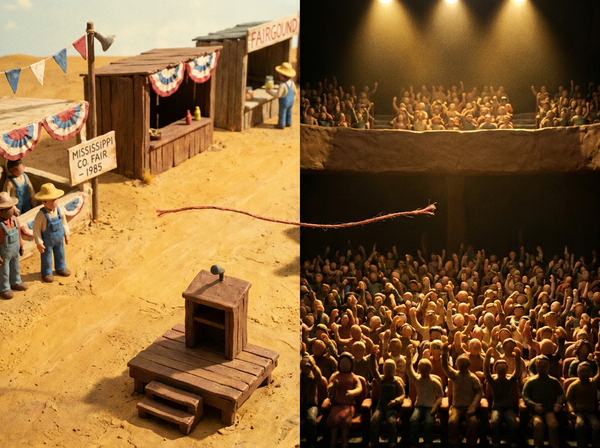
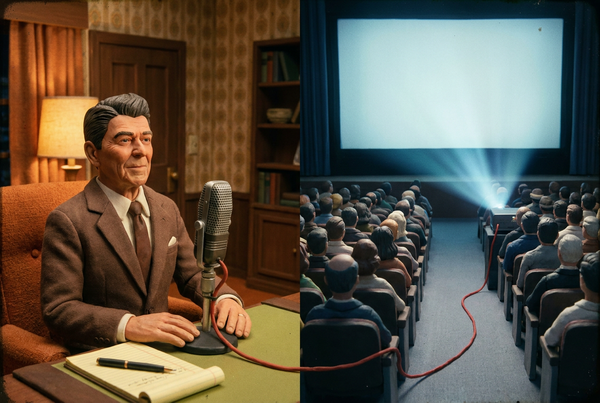
There's a genre of film that arose in the early 1950's and evolved into several threads, but it has some common themes: Cheap to produce, frough edges, and more than a little sleaze. Delightful.

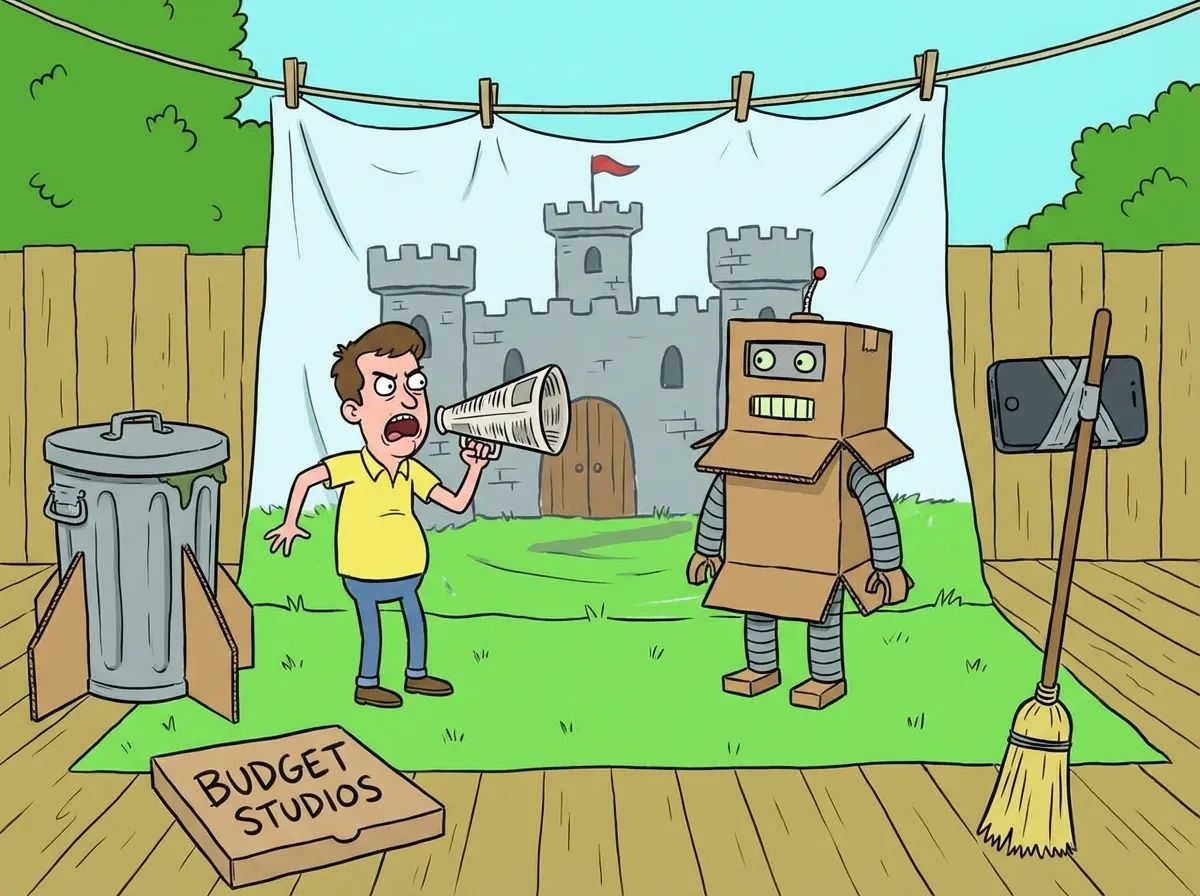
I spent Saturday researching this, because I am tired of all the political chaos monkey shenanigans, and then the WHCD turned into shit. I am going to ignore that, and instead shift to trash cinema. I hope you enjoy this diversion.
There's a particular kind of pleasure that respectable film culture has never quite figured out what to do with. It isn't ironic detachment — the smug "it's so bad it's good" posture that lets you keep one foot out the door, laughing at the movie rather than with it. And it isn't the cultivated appreciation of the midnight-movie connoisseur who's read too much Susan Sontag and wants you to know it.
It's something more honest than either of those: genuine affection for a body of cinema that was made fast, cheap, and without apology, by people who understood exactly what their audience wanted and delivered it with more sincerity than Hollywood's prestige machine has ever managed.
I'm talking about exploitation cinema. And I'm here to make the case that it matters, also to justify why I have picked up the habit.
First, some definitions
"Exploitation film" is a term that's been applied so broadly it risks meaning nothing, so let's pin it down. At its core, an exploitation film is one built around a marketable element — a taboo subject, a scandalous hook, a visceral sensation — that the mainstream industry either couldn't or wouldn't touch. The film exists to exploit that element commercially. (think: Reefer Madness)
This covers a lot of ground. It covers Ed Wood shooting Plan 9 from Outer Space with paper plate flying saucers and his wife's chiropractor filling in for a dead Bela Lugosi. It covers Roger Corman cranking out a Vincent Price picture in two weeks on leftover sets. It covers the women-in-prison pictures, the biker films, the blaxploitation cycle, the gore merchants, the drive-in roughies, and a vast river of imported product — spaghetti westerns, kung fu pictures — that American distributors retitled, redubbed, and sold to theaters that needed something on the screen Thursday night.
What unites all of it is not quality (which varies enormously) but an economic logic and a cultural position. These films existed outside the system, fed the venues the system didn't control, and served audiences the system didn't bother to court.
Sidebar: I discovered this genre on Amazon Prime streaming, if you are creative in your searching, there is a rich rabbit hole of this slop to binge on. That drove my desire to learn more about where it came from and it has brought me joy. Don't judge me!
The machine that made it possible
The story starts with a 1948 Supreme Court decision that the film industry's trade press covered as a catastrophe and that turned out to be the most creatively productive ruling in American cinema history.
United States v. Paramount Pictures broke up the studios' vertical integration. Before the decision, the majors owned the theaters. They could guarantee their pictures a run, lock out competitors, and treat the exhibition side of the business like a captive market. The antitrust ruling forced divestiture. Suddenly, thousands of theaters — and a booming new format, the drive-in[1], which went from roughly 800 screens in 1948 to over 4,000 by 1958 — had to fill their schedules on the open market.
That market needed product. Lots of it. Cheap, fast, and willing to deliver what the majors, newly cautious under the Production Code and terrified of television, wouldn't provide. Into that gap walked a generation of independent producers who would build one of the most genuinely weird industrial ecosystems in American cultural history.
The Production Code deserves a call-out:
The formal name was the Motion Picture Production Code, adopted in 1930 and enforced with real teeth starting in 1934 when Joseph Breen took over the Production Code Administration. "The Hays Code" comes from Will Hays, the former Postmaster General who was brought in to run the Motion Picture Producers and Distributors of America in 1922 specifically to clean up Hollywood's public image after a string of scandals. Hays was the political face of the operation — the respectable front man — which is why his name got attached to the Code even though Breen was the one actually reading scripts and demanding changes.
In practice, film historians tend to use "the Production Code" when discussing the mechanics of enforcement and "the Hays Code" when discussing its cultural impact and reputation, but they're interchangeable and you'll see both in serious film writing without any meaningful distinction intended.
The Code's actual enforcement is worth knowing because it explains the exploitation ecosystem directly. From 1934 to roughly 1952, the PCA had real power — a film without a PCA seal couldn't play in any of the major studio-owned theaters, which was most of the first-run market. That's why the exploitation films were structurally confined to the second-run houses, drive-ins, and regional circuits. They were operating outside the seal system by necessity, which is also what gave them the freedom to show content the mainstream couldn't touch.
The Code was formally replaced by the MPAA rating system in 1968 — G, M, R, X — which is when the exploitation ecosystem started to shift, because suddenly mainstream studios could make R-rated pictures and the competitive advantage the exploitation producers had held for thirty years began to erode. That's not a coincidence. The arrival of the rating system is one of the structural reasons the classic exploitation cycle winds down in the mid-1970s.
What they were actually selling
The exploitation film's marketing logic was simple and it was genius: find the thing your audience is secretly curious about, the thing the culture has marked as dangerous or forbidden or shameful, and put it on the poster.
In the 1950s that meant atomic monsters and alien infiltrators, feeding off nuclear anxiety in a country that had just learned it could be vaporized. It meant juvenile delinquents for a society convinced its teenagers were one bad influence away from switchblades and ruin. It meant, in a handful of more daring cases, the first tentative explorations of subjects — cross-dressing, drug use, interracial relationships — that mainstream cinema simply would not touch.
In the 1960s it expanded: the counterculture, biker gangs, the sexual revolution, increasingly graphic violence. In the early 1970s it produced the blaxploitation cycle, which handed Black filmmakers and Black actors a foothold in an industry that had largely ignored them, wrapped in a genre package that the suits felt safe greenlighting because it was "just" exploitation.
Throughout all of it, the formula remained constant: identify the anxiety, the desire, or the taboo; put it in the title and on the one-sheet; make the movie for as little money as possible; get it to the theaters before anyone else does.
Why it's worth your time
Here's what respectable film culture tends to miss about all this: the constraints produced things that wouldn't have existed otherwise.
When you can't afford sets, you shoot on location, and suddenly your film has a texture — a specific Florida swamp, a real Los Angeles back alley, an actual small-town main street — that million-dollar productions were actively trying to escape. When you can't afford stars who've learned to perform, you cast people who simply behave, and sometimes that behavioral honesty is more affecting than anything trained naturalism delivers. When you have five days to shoot a script, you make decisions — camera angles, blocking, editing rhythms — that a bigger production would committee to death, and occasionally those snap decisions are exactly right.
And then there's the social record. Exploitation films are primary sources. They document, with unfiltered directness, what American culture was afraid of and obsessed with at any given moment in the postwar decades. The atomic monster films of the 1950s are a more honest account of nuclear anxiety than anything the prestige studios were making. The blaxploitation films carry more of the texture of Black American urban life in the early 1970s than anything that was winning Oscars. The drive-in roughies, for all their crudeness, engaged with female desire and agency in ways that mainstream romantic comedies studiously avoided.
The series
Over the next several posts I'm going to walk through the major tributaries of this tradition. The 1950s B-picture ecosystem — atomic creatures, alien infiltrators, Ed Wood in full flight. The noir pictures made on poverty row budgets that accidentally became more unsettling than the A-pictures they were copying. The drive-in roughies and everything that flowed from them. The blaxploitation cycle. The gore merchants. The imported product. And at the center of all of it, the one man who understood the machine better than anyone and ran it more ruthlessly and more productively than anyone else ever has: Roger Corman.
That's where we start.
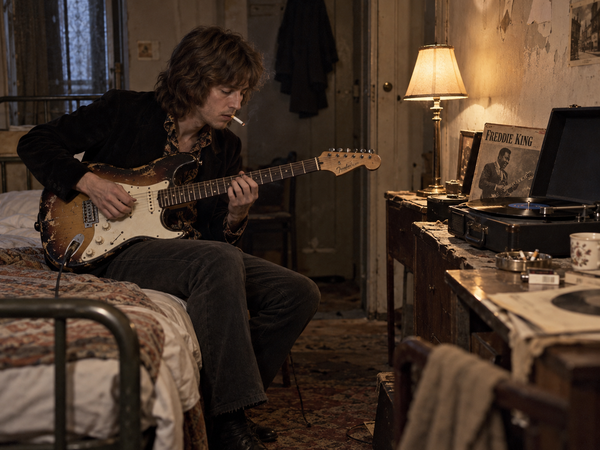
Musical Coda: Van Halen's "Dirty Movies" is definitely inspired by this genre
Do you have a favorite of this era? Any that you recommend? Hit the comments!
1 - Drive-in theaters were a uniquely American thing, an offshoot of car culture, and it was something that all Gen-X really remembers vividly. A lot of Gen-X did a lot of necking in fogged up cars at Drive-in theaters
 Share on Bluesky
 Share on Threads
 Share on Facebook
 Share on Mastodon
 Share on Reddit
 Share on Email