Lost in Translation: Spaghetti Westerns, Kung Fu Pictures, and the Beautiful Chaos of the Grindhouse Import
Grindhouse meets foreign production, and the imports were born. I remember my father taking me to see the karate/samurai movies at Camera One in San Jose. Good times.

There is a specific pleasure that belongs exclusively to the dubbed foreign film playing in a grindhouse theater, and it is the pleasure of two completely different cinemas occupying the same frame simultaneously without quite resolving into each other.
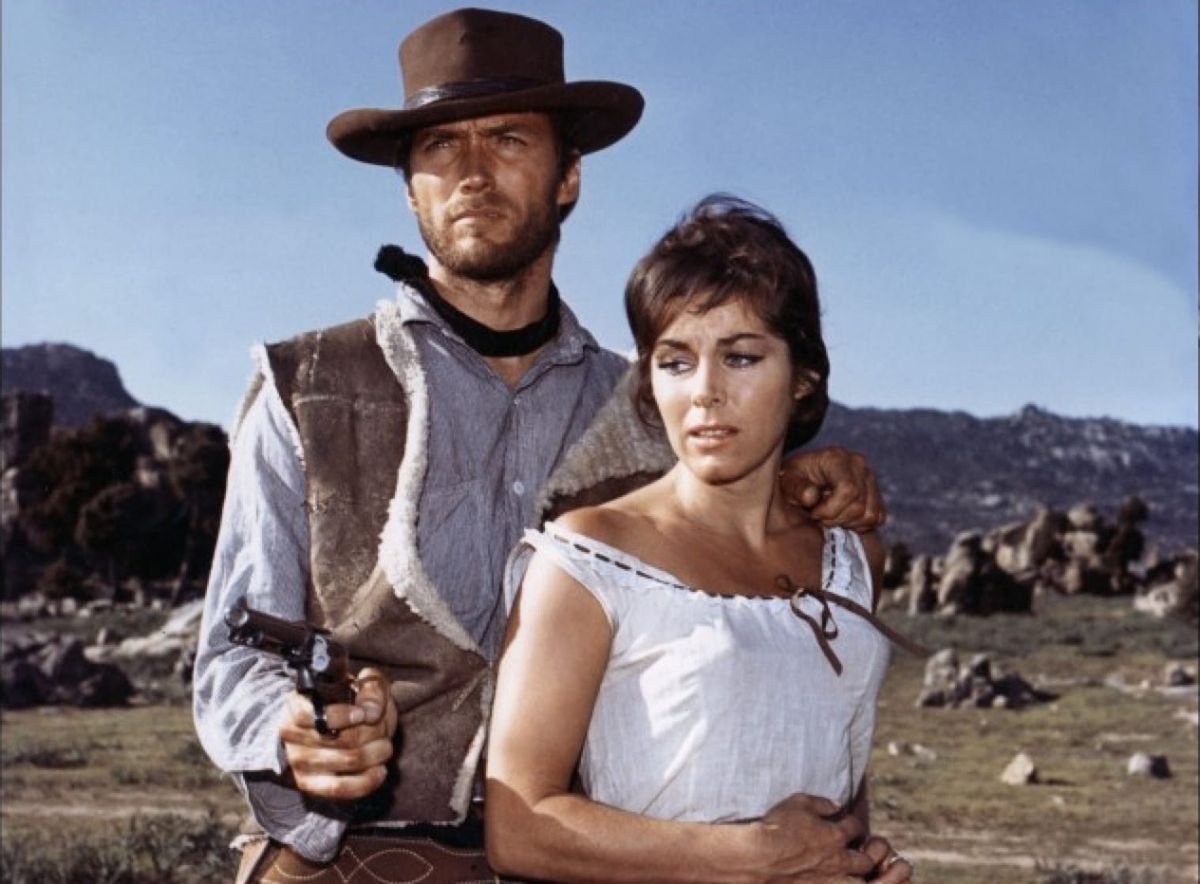
The image is Italian — shot in the Spanish desert outside Almería by a director who grew up watching American westerns the way an anthropologist studies a foreign culture, simultaneously fascinated and analytical, loving the form while remaining permanently outside it. The sound is American — dubbed in Rome or New York by voice actors working from a script that is itself a translation of a translation, the original Italian dialogue rendered into English that fits the mouth movements approximately and the spirit of the scene intermittently. The music is Ennio Morricone, which belongs to no national cinema and no genre tradition and sounds like nothing that existed before it and nothing that has quite existed since.
The result is a film that feels genuinely alien — more alien, in its way, than any domestic product could be, because it is looking at American mythology from the outside with eyes that see things the mythology's originators couldn't see about themselves. The spaghetti western understood the American West better than the American western did, precisely because it wasn't American. Distance clarifies.
This is what the grindhouse import gave American audiences who were paying attention: a view of their own cultural furniture from an angle they couldn't access themselves.
How the import circuit worked
The infrastructure that brought foreign product into the American exploitation market was unglamorous and efficient in roughly equal measure.
A regional distributor — operating out of Atlanta, or Chicago, or Los Angeles, with connections to the drive-in circuits and the urban grindhouse theaters in his territory — would attend an international film market, most importantly the Cannes market and the American Film Market, looking for pictures that could be acquired cheaply and turned around fast. The acquisition price for a foreign exploitation picture was negligible by American standards. The retitling, redubbing, and repackaging cost a little more. The profit margin, on a picture that had already recouped its production costs in its home market, could be substantial.
The distributor's aesthetic judgment was entirely commercial: does this picture have something — a set piece, a face, an action sequence, a concept — that can be sold on a one-sheet? The question of whether the film around that something was any good was largely irrelevant. The one-sheet was selling the something. The film was delivering whatever it delivered.
This system had predictable consequences for the films. They were retitled to match American market expectations — often losing in the process any poetry the original title carried. They were recut to tighten running times or, occasionally, to insert new footage shot specifically for the American version. They were redubbed into English of varying quality, which is why the same actor's voice might change between films and why characters occasionally say things that have only a theoretical relationship to the original dialogue.
What the system couldn't strip out was the images. The images came from filmmakers who were making genuine artistic choices, working in specific national traditions, with specific technical vocabularies, and those choices survived the translation process even when everything else was compromised. You could redub Sergio Leone. You couldn't redub what his camera was doing.
The spaghetti western: America seen from Almería
The spaghetti western is the imported product cycle with the strongest claim to serious artistic consideration, and the claim is serious enough that it doesn't need hedging.
The genre was not invented by Leone — a handful of Italian westerns predated A Fistful of Dollars (1964) — but Leone defined it so completely that everything before him reads as prologue and everything after him reads as response. He had grown up watching American westerns, loved them with a cinephile's devotion, and at some point reached the conclusion that the genre's mythology was not telling the whole truth about the world it depicted. The American western, in its classical form, was a morality tale operating inside a framework of civilizational progress — the frontier being tamed, institutions being built, civilization advancing. Leone looked at that framework and found it unconvincing.
His West is not being tamed. It is a landscape of pure appetite, where every transaction is a negotiation between competing greeds and the man who survives is the one who understands the negotiation most clearly. There is no civilization advancing in the Leone pictures. There is money, and there are men willing to kill for it, and occasionally one of them is slightly more competent and slightly more self-aware than the others, and that slight margin is the difference between living and dying. That's all. That's everything.
A Fistful of Dollars (1964) established the template, working from Akira Kurosawa's Yojimbo so directly that Kurosawa sued and won a share of the European rights. The Man With No Name — Clint Eastwood, doing something with stillness and economy that his subsequent career confirmed was not accidental — plays both sides of a town against each other for his own profit. He has no ideology. He has no loyalty. He has a very clear understanding of the situation and the patience to let it develop until the moment he can exploit it. He wins. The town is destroyed in the process. Leone presents this as the natural order of things.
For a Few Dollars More (1965) added Lee Van Cleef, whose face — angular, cold, watchful — was a Leone discovery in the sense that American cinema had been using Van Cleef as a villain for fifteen years without understanding what it had. Leone understood. Van Cleef's Colonel Mortimer is the first Leone protagonist with something resembling an interior life, a private motivation that gives the character a dimension the Man With No Name deliberately withheld.
The Good, the Bad and the Ugly (1966) is where the template became a masterpiece. The three-way standoff in the cemetery — Eastwood, Van Cleef, Eli Wallach — is the most purely cinematic sequence Leone ever constructed, a lesson in the grammar of tension that film schools still use. Morricone's score builds from silence to something that feels less like music than like inevitability made audible. Leone cuts between eyes and hands and the landscape and back to eyes with a precision that is the opposite of the loosey-goosey pacing the genre's detractors attributed to it. The sequence runs three minutes. It feels like it lasts as long as the preceding film.
The Once Upon a Time pictures — Once Upon a Time in the West (1968) and Once Upon a Time in America (1984) — are Leone at his most operatic and his most deliberate, pictures that take the genre's mythology and push it until the mythology reveals its own bones. Once Upon a Time in the West is structured as an elegy for the western itself — Charles Bronson, harmonica, a villain played by Henry Fonda cast against type specifically because American audiences trusted Fonda and Leone wanted them to feel that trust betrayed. The film runs nearly three hours in its uncut version. It earns every minute. It is one of the great American films made by someone who was not American.
Morricone
This requires its own section because Morricone is not a supporting element of the spaghetti western story. He is a co-author of it.
Ennio Morricone had been a classically trained composer and arranger — he'd worked with avant-garde composers in Rome, written arrangements for pop records, scored documentaries — before Leone brought him in on A Fistful of Dollars. What he produced was not film scoring in any conventional sense. It was something closer to sound design elevated to the level of composition: electric guitar, whistling, wordless voices, gunshots, whipcracks, church bells, all organized into themes that carried the emotional weight the dialogue frequently declined to carry.
The Dollars trilogy scores are so deeply embedded in the genre's identity that it becomes difficult, watching the films, to separate Leone's images from Morricone's sound. They were designed together — Leone would often play the score on set during filming, letting the music dictate rhythm and pacing rather than scoring to picture in post. The result is a synchronization between sound and image that feels less like collaboration than like a single sensibility working in two registers simultaneously.
Morricone was nominated for the Academy Award five times before receiving an honorary Oscar in 2007 and a competitive one for The Hateful Eight in 2016. The honorary Oscar came forty years after the work that deserved it. The Academy's relationship with the spaghetti western was, to put it diplomatically, complicated.
The kung fu picture and the second wave
If the spaghetti western was the import cycle's artistic peak, the kung fu picture was its popular peak — the moment when the imported product stopped being a niche taste and became a genuine mainstream phenomenon, at least briefly.
The mechanism was similar: product made cheaply in Hong Kong by Shaw Brothers and Golden Harvest studios, acquired by American distributors for minimal money, retitled and redubbed and sent to the urban grindhouse circuit. The difference was the audience, which skewed heavily toward Black urban viewers in a way that created an unexpected cultural fusion — the kung fu picture arriving in many of the same theaters that had been showing blaxploitation films, for overlapping audiences, at the same moment.
This was not lost on the filmmakers. Cleopatra Jones (1973) folded martial arts sequences into its blaxploitation template explicitly. Jim Kelly, a Black martial artist, appeared in Enter the Dragon (1973) — the picture that broke Bruce Lee into the American mainstream — and then starred in a series of hybrid pictures that sat squarely at the intersection of both cycles. The crossover audience was real and the distributors followed it.
Bruce Lee requires a paragraph because Bruce Lee is not fairly described as exploitation product, even by the generous standards we've been applying throughout this series. Enter the Dragon was a Warner Bros. co-production, not a grindhouse acquisition, and Lee's physical gifts and screen presence were operating at a level that transcended genre classification. He was, simply, one of the most charismatic performers in the history of cinema, and the physical vocabulary he brought to the screen — the precision, the speed, the quality of absolute conviction in every movement — was unlike anything that had existed before it.
He died at thirty-two, six days before Enter the Dragon was released. The subsequent Bruce Lee industry — the imitators, the "Bruceploitation" cycle of films starring performers with names like Bruce Le and Bruce Li and Dragon Lee — is one of the stranger episodes in exploitation history, an entire shadow-career constructed posthumously from a man's image and fighting style by producers who understood the market and had absolutely no interest in what had made the original special.
The Shaw Brothers catalog that preceded and surrounded the Lee pictures is worth exploring on its own terms. Directors like Chang Cheh and Lau Kar-leung were making genuine genre art — choreographed action pictures with specific aesthetic philosophies, real formal ambitions, and an understanding of the body in motion as a cinematic subject that Hollywood has spent fifty years trying to catch up with. The dubbing and retitling stripped the context. The images remained.
What the grindhouse did to these films, and what they survived
The import circuit was not kind to the films it carried. Retitling was the least of it.
Recuts could be savage — scenes removed, sequences reordered, new footage inserted to add American actors or to make the film conform to a different genre expectation than the original intended. Once Upon a Time in the West lost forty-five minutes for its initial American release, removing in the process much of what made the film's pacing deliberate rather than merely slow. Argento's American releases were routinely stripped of twenty minutes or more. The Shaw Brothers pictures were redubbed so carelessly that characters' names changed between scenes.
And yet. The images survived. The choreography survived. Leone's compositions survived. Morricone's music survived, though sometimes replaced by American library tracks that have the same relationship to the original scores that a photocopy has to a painting. The essential thing — the specific vision that a filmmaker from Rome or Hong Kong brought to material that American cinema had been handling one way for decades — survived the translation process because it was embedded in the images themselves, and the images couldn't be dubbed.
This is what the grindhouse import ultimately gave its audiences: access, however compromised, to cinemas that were thinking differently about genres that American films had calcified into formula. The spaghetti western looked at the American West and saw appetite and myth and the gap between them. The kung fu picture looked at the body in conflict and saw choreography and philosophy and the discipline that makes both possible. The Italian horror pictures looked at death and saw it as a subject worthy of visual poetry.
None of this arrived clean. It arrived retitled, recut, redubbed, playing in theaters that needed something on screen Thursday night and weren't particular about what. It arrived as exploitation product in the most literal sense — foreign creative work being exploited for American commercial purposes without much concern for authorial intent.
It arrived anyway. That it arrived at all, and that enough of it survived the arrival to matter, is the grindhouse import's permanent contribution to American film culture. A generation of filmmakers — Tarantino being the most commercially visible but far from the only one — grew up watching these pictures in exactly this context and absorbed from them a visual education that the respectable film culture of the same period wasn't providing.
The Spanish desert outside Almería, standing in for the American West, photographed by an Italian director who loved the myth more clearly because he was outside it, projected in a theater that smelled like popcorn and something less identifiable, dubbed into English that didn't quite fit: that's where some of the most important film education of the last sixty years happened, and nobody planned it that way, and it happened anyway.
Next, and finally: where the exploitation tradition went — the home video revolution, the death of the grindhouse, and why the films survived the theaters that showed them.