The Speech Before "The Speech"
Goldwater's own advisers didn't want Reagan on the air. One rich Californian wrote a personal check and put him there anyway. Episode IV

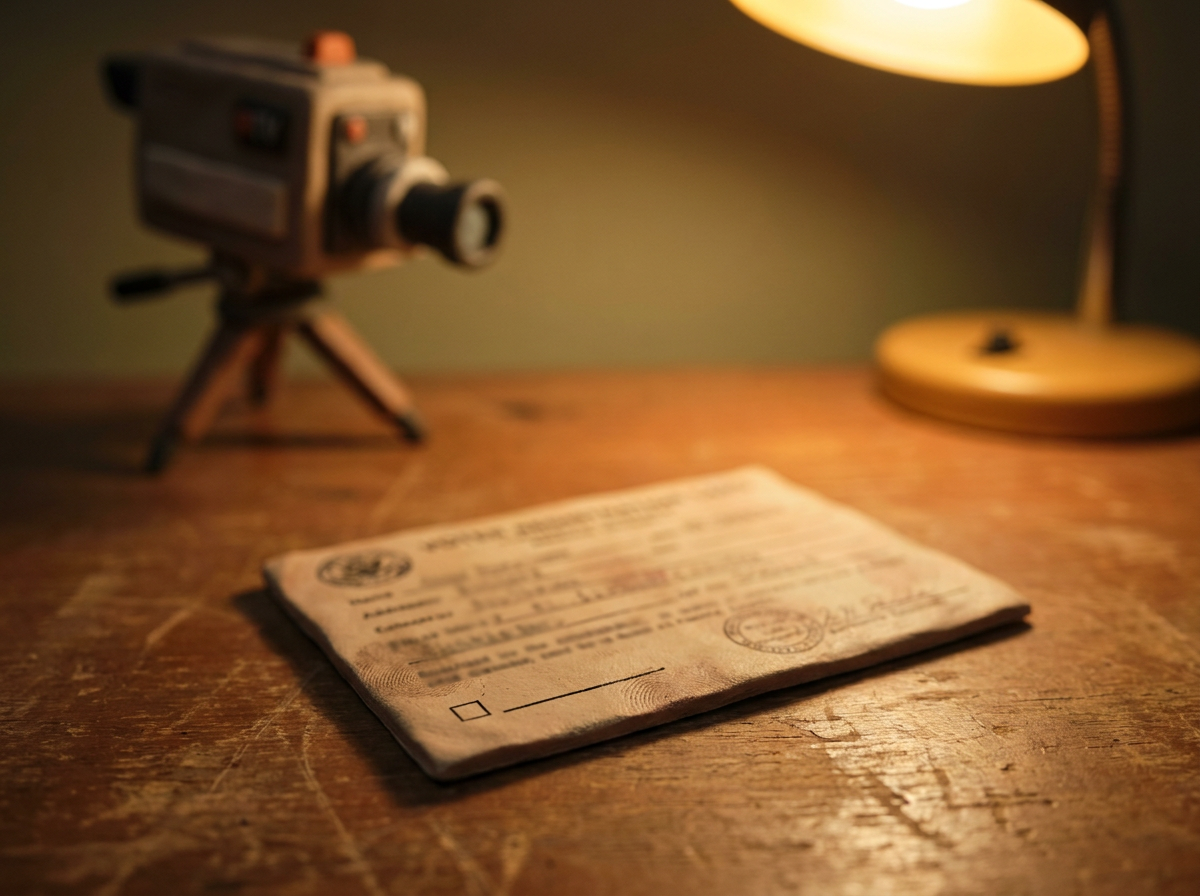
Fall 1960. Ronald Reagan is out campaigning hard for Richard Nixon against John F. Kennedy, doing so under a banner his own party affiliation should have made impossible: he campaigns, in the Reagan Presidential Library's own later phrasing, as a Democrat for Nixon. Not a former Democrat. Not a Republican who used to be one. His own voter registration, checkable, on file, still reads Democrat while he stumps for the Republican nominee for president.
It is a strange enough contradiction that it's worth sitting with for a second. The label on the organizing effort and the label on his own registration card are the same word, doing opposite work.
Why He Waited
Inertia, strategy, or both.
Reagan had reportedly been considering a formal switch as early as 1960 itself, and there's a specific, almost cynical explanation on record for why it didn't happen yet: historian Edward Yager's account holds that people in Nixon's own camp believed Reagan would be more effective campaigning for Republicans while still nominally a Democrat, a Democrat's endorsement of the Republican ticket carrying more persuasive weight with wavering Democratic voters than another Republican's would. If that's right, his registration wasn't lagging behind his politics by accident. It was, for at least one election cycle, more useful to Nixon's operation precisely because it hadn't caught up yet.
Fall 1962: The Paperwork Finally Changes
A specific, dated, bureaucratic act.
Two years later, in the fall of 1962, Reagan officially changed his party registration to Republican. The famous formulation people quote now, "I didn't leave the Democratic Party, the party left me," is a later, cleaner piece of rhetoric than anything on the record from the actual moment of the switch. In 1982, well into his presidency, a reporter asked him a version of whether he'd once been a Democrat, and he answered with something closer to self-deprecating shorthand than a manifesto: yes, he said, because for many years I was a Democrat. The tidy line came afterward. The registration change itself was just a form.
I didn't leave the Democratic Party, the party left me.
How fucking often do we hear that tired trope?
Sweaty's Corner doesn't have a marketing budget or an algorithm pushing it into anyone's feed. It has readers who share it. If this one landed, sending it to someone who'd get something out of it — or subscribing so the next one finds you directly — genuinely moves the needle.
1964: Co-Chair, and the Same Names Circling Again
California's Goldwater operation, and men we've met before.
By 1964, Reagan is California co-chair of Barry Goldwater's presidential campaign, and the wealthy California conservatives who will matter enormously to this trilogy later are already active around him, Henry Salvatori chief among them at this stage. The speech itself, by this point, essentially already exists. Episode 3 already covered how it got built, years of GE plant floors and Rotary dinners turning one man's stump speech into a fully rehearsed argument. What's left to explain isn't the speech's content. It's how, with weeks left in a national campaign, it nearly didn't air at all.
The Broadcast Nobody Official Wanted to Pay For
This is the part of the story most retellings skip entirely.
Goldwater's own inner circle, by multiple accounts, actively opposed giving Reagan a national television slot this close to the election. It's not fully clear from the available record whether the resistance was about Reagan specifically, cost, or simple campaign-message discipline this late in a race Goldwater's advisers already sensed was going badly. What is clear is that the objection was real enough to nearly kill the broadcast.
Henry Salvatori is the man credited with breaking the deadlock. He personally convinced Goldwater to allow the televised speech over his own advisers' objections, and then funded the telecast and recording himself. Not the party. Not the official campaign apparatus. One wealthy Californian, writing a personal check to put a speech on the air that Goldwater's own strategists didn't want aired.
"Salvatori funded the telecast and recording of Reagan's speech himself, a fact crucial to the speech's eventual airing."
Separately, operative F. Clifton White, who had been pushed out of a formal role in the official campaign, was running his own independent operation by this point, an organization functioning under a name close to Citizens for Goldwater-Miller, distinct from the official campaign structure entirely. Whether White's operation and Salvatori's personal check were parts of the same effort to get the speech aired, or two separate workarounds converging on the same goal, isn't fully resolved in what I found for this draft. Either way, the pattern holds: the official campaign said no, or close enough to no, and private money and private initiative went around it.
The Night Before
Everything is in place. Nothing has happened yet.
By late October 1964, the pieces are all sitting there, unfired. A speech that has been performing well in front of live rooms for years. A private check that got it onto national airwaves over a campaign's own resistance. A network of California money already circling Reagan personally, not just Goldwater's candidacy. A registration card that, only two years earlier, still would have made all of this faintly absurd on paper.
None of it means anything yet. The broadcast hasn't happened. Nobody outside a small circle knows what October 27 is about to do.
Series: The Fulcrum, Book One: The Actor, Episode 4
The rest of this series is landing under The Fulcrum as it publishes.
Keep the lights on
Like what you've read, but not able to switch to paid? Why not buy me a coffee instead! All money goes to help defray the expense of running the site.