They Built the Swamp, Part One: The Machine
In 1987 Reagan killed the Fairness Doctrine. A year later Rush Limbaugh went national. Roger Ailes had been planning Fox News since 1970. None of this was an accident. They wrote it down.


There's a particular kind of credibility that comes from people who confess to the crimes they committed before deciding they were crimes. Charlie Sykes has that credibility, and it's worth taking seriously, even if his current perch in the Never Trump ecosystem occasionally strains it.
Sykes spent 23 years as one of Wisconsin's most influential conservative talk radio hosts, running the morning drive on WTMJ-AM in Milwaukee. He was not a fringe figure or a bomb-thrower. He was the establishment, the kind of conservative that other conservatives pointed to as responsible and substantive. He wrote books. He got quoted. He mattered.
Then, in 2017, after watching the audience he had spent two decades cultivating enthusiastically embrace Donald Trump, he wrote How the Right Lost Its Mind. In it, he described — with genuine candor — what he and his colleagues had actually been doing all those years. They hadn't been informing their audiences. They had been sealing them. Training them to reject any information that came from outside the ecosystem. Teaching them that mainstream media was corrupt by definition, that nuance was weakness, that anyone who pushed back on conservative orthodoxy was either a fool or a traitor.
It worked perfectly. Right up until Sykes himself tried to push back — on Trump — and discovered he had spent twenty years burning the bridge he was now trying to cross. His audience didn't trust him anymore. He had taught them not to.
This is the story of how that machine got built, who built it, and why the other side never managed to build one like it.
The Gate That Was Opened
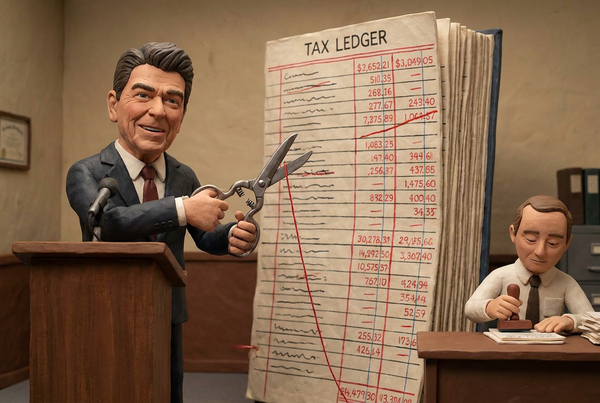
In 1987, Ronald Reagan's Federal Communications Commission voted 4-0 to eliminate the Fairness Doctrine, a policy that had been on the books since 1949. The doctrine required broadcast license holders to present controversial public issues in a balanced way. Reagan had already vetoed a congressional attempt to codify it into law; when the FCC finished the job, there was no longer any mechanism requiring a radio station to give equal time to opposing viewpoints.
The FCC's rationale was ideologically consistent — cable television had expanded the media landscape, scarcity no longer justified the restriction, and the First Amendment concerns were real. These weren't entirely bad arguments. The Fairness Doctrine was an imperfect instrument with genuine critics across the political spectrum.
But the effect was specific and swift. On August 1, 1988 — less than a year after the doctrine's elimination — Rush Limbaugh's Sacramento-based radio program went national. The format Limbaugh had developed — three hours a day, five days a week, one voice, no counterpoint, pure conservative activation — would have been legally untenable under the old rules. Under the new ones, it was a business model.
This was not coincidence. Reagan was an old radio hand who understood the medium. The conservative movement had been waiting for this opening. And they were, crucially, the only ones ready to walk through it.
The AM Radio Machine
By the mid-1990s, Limbaugh had roughly 20 million weekly listeners. The format he pioneered spread rapidly. AM radio, which had been slowly dying as FM took over music, turned out to have a second life as a delivery mechanism for political content. The stations were cheap. The signals were powerful, particularly in rural and exurban areas. The syndication model — one show, hundreds of affiliates, minimal production cost — printed money.
What made the format politically consequential wasn't just the audience size. It was the properties of the medium itself.
Talk radio is one-directional by design. There is no genuine debate, no equal time, no mechanism for correction. The host defines reality; callers exist to affirm or be dismissed. This creates an epistemic environment unlike anything that came before — three hours a day of a single authoritative voice telling its audience what is true, who the enemy is, and why any information source that contradicts the host is compromised.
The emotional register was not persuasion. It was activation. You were not being asked to evaluate arguments. You were being told that your beliefs were correct, your instincts were sound, and the people who disagreed with you were not just wrong but contemptible. This is a profoundly different product from journalism, and it turned out to have a much larger market.
Charlie Sykes, in Wisconsin, was running a local version of this operation for more than two decades. The distrust inoculation he describes in his book — the daily training of audiences to reject information from outside the ecosystem — wasn't incidental to the format. It was the format. You don't just deliver a message; you close off the routes by which the message might be challenged. By the time Sykes tried to use his own credibility to push back on Trump in 2016, he had spent his career systematically spending that credibility down to zero. The audience he built no longer needed him to tell them what to think. He had built them to be self-sufficient.
Meanwhile, by 1990 there were roughly 360 news and talk radio stations in America. By the mid-2000s there were more than 1,300. Virtually all of them were running conservative programming. The attempt to build a liberal equivalent — Air America, which launched in 2004 with Al Franken and Rachel Maddow among its hosts — filed for its first bankruptcy in 2006, was sold for $4.25 million, and shut down entirely in January 2010. The appetite simply wasn't the same. More on why in Part Two.
Fox and the Vertical Integration
Roger Ailes launched Fox News in October 1996. The stated mission was to provide a "fair and balanced" counterpoint to the alleged liberal bias of the mainstream networks. This was, to put it charitably, a creative framing.
In 2011, researchers unearthed a document from the Nixon Presidential Library titled, with remarkable straightforwardness, "A Plan For Putting the GOP on TV News." It was written in 1970, when Ailes was a young Nixon media consultant, and it proposed routing Republican-friendly stories directly to local television stations, bypassing the network news divisions. Ailes wrote notes in the margins calling the idea "excellent" and asking "Who would purchase equipment and run operation? White House? RNC?" The document bears his handwriting alongside that of H.R. Haldeman, Nixon's chief of staff and future Watergate felon.
It took Ailes 26 years and Rupert Murdoch's money to build what he sketched out in that memo. The intervening decades hadn't changed the concept, just the technology.
Fox completed what talk radio had started. The AM format had captured an enormous audience in rural and exurban America, but it had no visual component and limited credibility as "news." Fox provided the television layer — the chyrons, the graphics, the panel format, the aesthetics of journalism — that gave the ecosystem a respectable face. It could be dismissed as talk radio by its critics, but it couldn't be dismissed as not-news by its audience. The on-screen production values said otherwise.
The innovation at Fox that's worth lingering on is what you might call the laundering mechanism. A claim would originate on a fringe website or in a think tank paper. Talk radio would amplify it. The Fox panel would convene to discuss it, with a token dissenting voice present to lose the argument rather than complicate it. Republican politicians — many of them Fox-trained, many of them appearing on Fox routinely — would repeat the claim. Then it became "a controversy," and the mainstream press felt obligated to cover it. The Overton Window didn't shift organically; it got cranked.
The whole structure — from the 1970 Nixon memo to Limbaugh going national in 1988 to Fox launching in 1996 — was not accidental. These were deliberate construction projects by people who understood exactly what they were building. This is not a conspiracy theory. They wrote it down.
The Thing About the Washington Times
Before we close Part One, a word about a financial model that doesn't get enough attention, because it complicates the "profitable outrage media" frame.
Some of the most influential outlets in the right-wing media ecosystem were never profitable and were never meant to be. The Washington Times, founded in 1982 by Unification Church leader Sun Myung Moon, received approximately $1.7 to $2 billion in subsidies from Moon's family and affiliated organizations over its lifetime — running an annual subsidy of roughly $35 million. It was Ronald Reagan's preferred morning read in Washington. It shaped the conservative conversation in the capital for decades. It was not a business. It was an influence operation with a masthead.
This distinction matters. The Limbaugh model and the Fox model can be explained by market forces — there was an audience, the audience had money, the format extracted it. But the Washington Times model is something different: a billionaire (or in Moon's case, a cult leader with billionaire resources) deciding that the political influence purchased by a money-losing media property was worth more than the losses. The return on investment wasn't revenue. It was access, agenda-setting, and the daily shaping of what Washington's conservative political class read over their morning coffee.
This is the thread that leads directly to where we are now — to donors sinking money into influencer ecosystems not because the content monetizes but because the reach is worth buying. That's Part Two's territory.
Charlie Sykes did something unusual when he wrote his 2017 book. He named what he had built and what it had done. He didn't fully reckon with his role in building it — the remorse has an edge of self-serving surprise to it, the shock of the craftsman when his tools get picked up by someone he doesn't like. But the description of the mechanism is accurate and worth crediting.
The machine was built deliberately, over decades, by people who understood what they were doing. It worked. The question of why it worked the way it did — and why the obvious counter-move of building a liberal equivalent kept failing — turns out to have answers that are more structural than tactical.
That's where Part Two picks up.
Part Two: Why the Other Side Can't Build This (And What Replaced the Business Model) (coming tomorrow!)
Want to support me but not ready for a monthly commitment? Why not buy me a coffee!