How a Dead Receptionist and a Wiped Tape Created the Best Show British Television Ever Made
Forget the killer robots for a minute. Forget the Op Art sets and the champagne. This starts with a murdered fiancée, a cancelled crime drama, and a contract that happened to expire at the wrong moment for everyone except British television.

If you came in through Part 2, you already know where this ends. Diana Rigg in a catsuit, kicking a Cybernaut through a wall while Steed sips champagne and looks unbothered. None of that exists yet. In 1961, The Avengers doesn't have Steed as the lead. It doesn't have a woman anywhere near the main cast. It's a fairly conventional crime melodrama about a doctor avenging his dead fiancée, and the guy in the bowler hat is second billing.
Here's how a show built almost entirely on accident, timing, and one actor's exit strategy became the thing you actually remember.
The Show That Wasn't Supposed to Be This Show
ABC needed a vehicle for a popular actor whose last show had just been cancelled. That's it. That's the entire creative mandate.
Ian Hendry had spent 1960 starring in Police Surgeon, a modest crime series that ran fourteen episodes before everyone involved, including the star, agreed it wasn't going anywhere. Viewers liked Hendry, though. ABC's head of drama, Sydney Newman, wanted him kept busy, so a new series got built around him fast.
It's a popular myth that The Avengers is a direct continuation of Police Surgeon. It isn't, not narratively. The production team was careful about that. Hendry's new character was originally going to be called Dr. David Dent before someone realized that was close enough to his Police Surgeon character, Dr. Geoffrey Brent, to confuse audiences. They renamed him David Keel. Same star, same producer, several of the same writers, but a genuinely new show.
Which means the entire premise of one of British television's most beloved cult properties exists because a network needed somewhere to park a contract player. Nothing about the origin was visionary. It was logistics.
Hot Snow, and the Show Nobody Remembers
The pilot is a murder mystery about a doctor's dead fiancée. There is no bowler hat wit. There is no umbrella-as-weapon. There is a heroin shipment and a lot of grief.
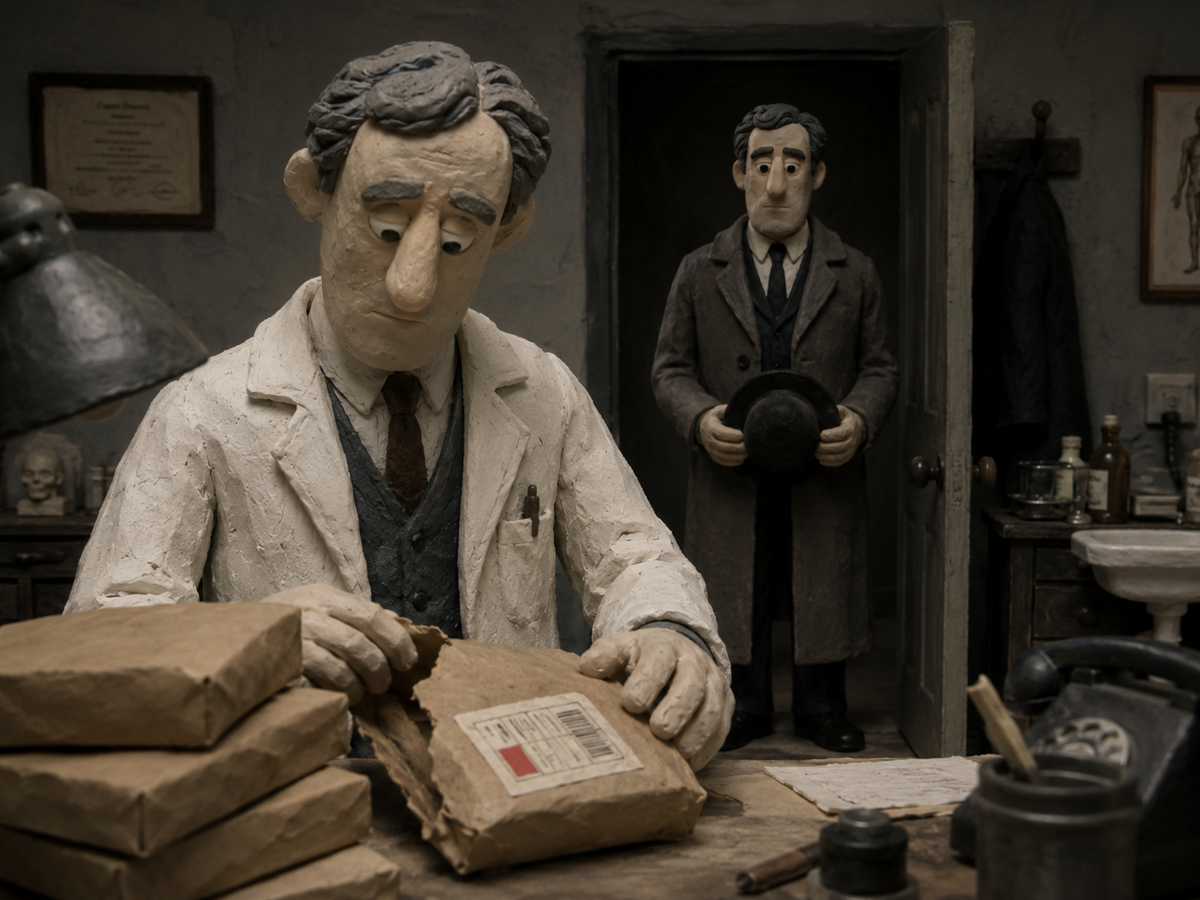
The first episode, Hot Snow, opens with Dr. David Keel's fiancée and receptionist, Peggy, murdered by a drug ring after Keel's surgery accidentally receives a heroin shipment meant for the gang. Keel sets out for revenge. A stranger named John Steed, who's been tracking the same gang, offers to help. That's the whole premise. Two men avenging a death. Steed isn't witty here so much as useful, a shadowy operator who knows things Keel doesn't.
Steed was so far from being the show's center of gravity in series one that he doesn't appear in two of the twenty-six episodes at all. Hendry got top billing. The show was his.
None of what you associate with The Avengers exists yet. No camp, no stylization, no leather, no killer robots. Just a fairly grim little crime drama with decent production values for 1961 and a supporting character who was, at the time, entirely disposable.
The Great Wipe, and Why This Still Makes Me Angry
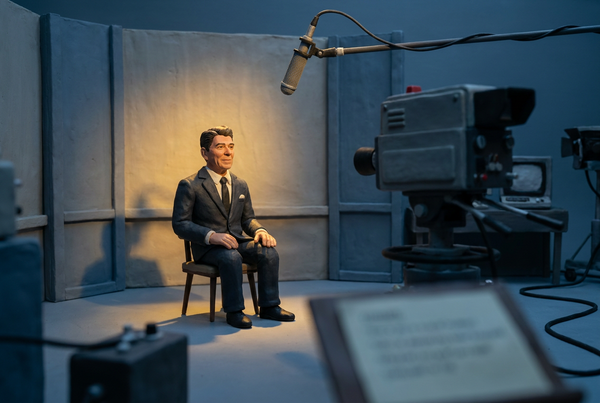
Twenty-six episodes of series one. Three survive complete. One more survives in fragments. The rest are just gone, and nobody who did it thought it mattered.
Here's where the profanity earns its keep. ABC Television, the ITV contractor that produced the show, recorded series one on videotape and then reused those tapes once the episodes had served their purpose, standard practice across British television at the time and not remotely unique to this show. Across the whole run of The Avengers, 22 episodes are missing entirely and one more survives only in part. Nearly all of that loss is series one. Tunnel of Fear is one of the handful that made it out, rediscovered decades later in a private collection because someone happened to keep a film telerecording instead of trusting the archive.
I want to be clear that this wasn't malice. It was cost, storage, and an industry that didn't yet believe television had a shelf life worth protecting. Doesn't make it less of a goddamn shame. An entire year of a show that would go on to run for eight more, largely gone, because nobody at the time thought Ian Hendry avenging a murdered receptionist was worth the tape.
Hendry Leaves, Almost by Accident
He didn't quit in a huff. A strike happened to end his contract at exactly the moment his film career started looking possible.
Production on series one was interrupted by an Equity actors' strike before the final block of episodes was finished. Hendry's contract expired during the disruption, and rather than re-sign, he took the opening to pursue film work, landing the lead in Live Now, Pay Later shortly after.
This wasn't a dramatic falling out. It was an actor recognizing a door had opened and walking through it. He'd go on to have a solid, if never quite star-level, film and television career, and he'd even return decades later for a guest spot on The New Avengers. But the version of The Avengers he was the lead of ended with him, and the show now had a much bigger problem than a missing star. It had already been restructured around the idea that Keel would take time off in favor of a new nightclub singer character, Venus Smith, meaning the production was already loosening its grip on Keel before Hendry left entirely.
With Hendry gone, there was no version of the show left to build around him. There was only Steed.
Macnee Gets Promoted, and the Show Finds Its Real Voice
He couldn't convincingly play tough. So the show stopped trying to be tough and became something else instead.
Patrick Macnee inherited a show that hadn't been built for him. The producers needed a new format fast, and the solution was to lean entirely into Steed, whose whole identity up to that point had been "mysterious operator who knows things." Macnee, by his own account, contributed pieces of his own wardrobe to the production out of budget necessity, including the bowler hat and umbrella that would become permanently associated with the character. What started as a cost-saving measure became the character's entire visual signature.
The bigger shift was tonal. Macnee was never going to be convincing as a two-fisted action lead, and the show, wisely, stopped asking him to be. Instead Steed became urbane, dandified, faintly absurd, someone who solved problems through wit and misdirection rather than force. That pivot, forced by circumstance rather than planned, is the single most important creative decision in the show's history. It's the decision that made everything after it possible.
But a show built entirely around a man who's clever rather than tough needs someone else to handle the physical stakes. Which is exactly the gap Cathy Gale walked into.
Cathy Gale: The First Real Leap
A widowed anthropologist with a PhD who could beat the hell out of anyone in the room. In 1962. On British television. Let that sit for a second.
When Honor Blackman was cast as Cathy Gale in series two, the show made a decision that was genuinely radical for its moment: a female lead who was Steed's intellectual equal, more physically capable than most of the men she fought, and defined entirely by her own expertise rather than her relationship to anyone. No romantic tether. No damsel framing. She got volunteered for dangerous undercover work and handled it with total poise, not because the show was being progressive for its own sake, but because that's simply who the character was.
The leather happened almost by accident. Gale needed to be a credible fighter, and the production initially tried her in dresses and skirts, which does not hold up well against judo kicks. Blackman split her trousers during one rehearsal, and Macnee suggested leather on the spot. A designer got called in, and the outfit that would later define Emma Peel's entire visual identity actually started here, as a wardrobe fix for an actress who kept tearing her clothes doing throws.
Blackman herself put the character's origin better than any critic has managed since.
"The script just got so boring. It always said, 'Cathy reaches into her handbag for a gun.'"
That's the whole ethos of the character in one sentence. Boredom with the cliché is what built the archetype.
Where the Show Started Getting Weird
Once Gale and Steed had a working dynamic, the plots stopped being about drug rings and started being about whatever the writers found interesting that week.
The Steed/Gale dynamic ran on sparring respect rather than romantic tension, a template the show would return to and sharpen with every subsequent partner. And with two leads who could plausibly handle anything the scripts threw at them, the scripts got bolder. The show started drifting from straightforward crime plotting toward something stranger, more artificial, more willing to build entire episodes around a premise nobody would have greenlit in 1961.
Blackman left for Goldfinger in 1964, and the show lost its first great partnership. But by then the formula was proven. A witty, physically overmatched Steed. A partner who was his equal in every way that mattered. A world that got stranger with every series. All of it built on accidents nobody planned: a cancelled crime show, a strike-shortened contract, a torn pair of trousers.
What came next is where the show actually became the thing everyone remembers. That's Part 2.