
The Comforting Fiction of Clean Money
If only it were so easy as to just reject the mega dollars from corporate villians, alas, there are plenty of other factors that sully that dream

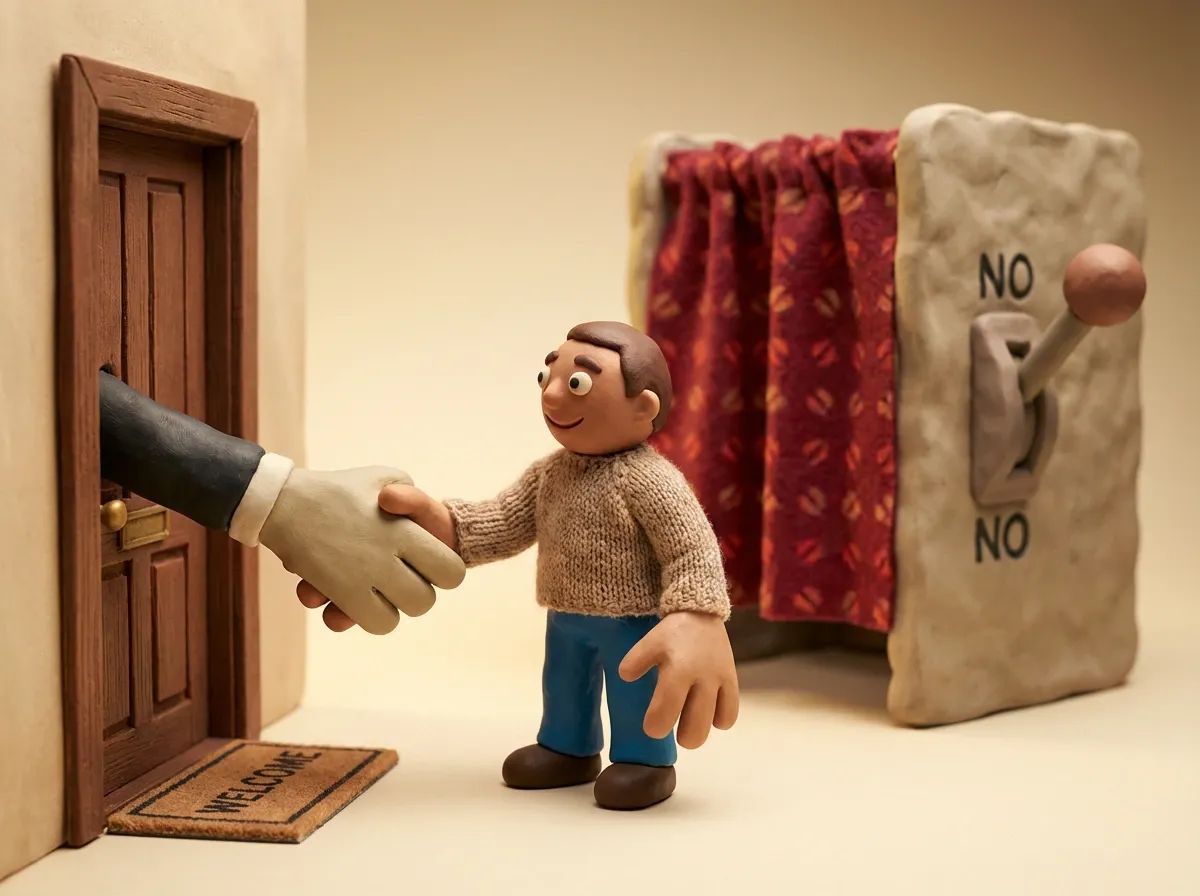
A commenter on the Democratic brand repair post (thanks busybusybee - my bees are back on the lavender and they're glorious) made an observation that I've been chewing on, and I want to push back on it a little. The argument, distilled: Democrats do better when candidates explicitly reject corporate donor money and run as something other than a corporate shill. When they lean into the small-dollar grassroots thing, the thinking goes, they connect with voters more authentically and the results follow.
It's a satisfying argument. It feels right. I want it to be right.
It isn't.
Or rather – it's right in the same way that "eating better and exercising more" is the cure for obesity. Technically accurate, strategically useless, and a great way to feel morally superior while the problem gets worse.
The Data Is Not Kind
Let's start with Amy McGrath and Mitch McConnell in 2020, because this is the cleanest available test case.
McGrath outraised McConnell in the first quarter of the cycle, pulling in $12.8 million to his $7.8 million, and small donors made up 63 percent of her fundraising total. McConnell, meanwhile, relied heavily on PACs and his colleagues' campaign coffers, with small donors accounting for just 16 percent of his total. OpenSecrets McGrath was the small-dollar grassroots dream candidate -- a Marine fighter pilot, running principled, running clean, running against one of the most loathed figures in the upper chamber.
She raised a record-setting $94 million – $63 million more than any prior candidate had ever raised for a Kentucky political campaign – and lost by nearly 20 percentage points.
Let that sit for a second. She raised more money. She raised it from more people. She raised it more cleanly. She got her ass handed to her by a margin so wide that McConnell, on election night, said – and I am not making this up – "at the risk of bragging, it wasn't very close."
The Beto/Cruz race in 2018 is a slightly more complicated case because Beto actually came close. O'Rourke refused PAC money entirely and raised $36.8 million more than Cruz through mid-October. The Texas Tribune He ran a genuinely exciting grassroots campaign, did his 254-county tour, got Beyoncé and Willie Nelson, and lost by 2.6 percent in the closest Senate race Texas had seen in decades.
So: moral victory, real movement, yet still a loss. And Texas has not since elected a Democratic senator[1]. The energy Beto generated was real. It just couldn't overcome the structural reality that Texas, at that moment, was a Republican state. The money didn't change that. The principles didn't change that.
Three Competing Theories of Why, All of Them Partially Right and Mostly Useless
Here's where it gets annoying, because Beto's near-miss in 2018 has been claimed as evidence for at least three mutually contradictory lessons, and partisans of each camp will hit you hard over the head with it.
The Bernie Bro read: Beto proved that a candidate running on principles and small-dollar grassroots energy can compete anywhere, and if only he had been more progressive rather than a centrist-in-moderate-drag, he would have won. The enthusiasm was the proof of concept. The loss was a failure of follow-through.
The Never Trump / Lincoln Project read: Beto proved the exact opposite. Rick Wilson, in Running Against the Devil, laid out the argument with his trademark brass-knuckle directness – Democrats in red and purple states need candidates who don't scare the squish voters, who want a moderate and are not youthful progressives who won't win Democrats the states they need. The Wilson reading of Beto is that he came close despite his positioning on certain issues, not because of it, and that a more deliberately center-right candidate in Texas might have actually closed the gap. This is the Never Trump theory of everything: the problem is always that Democrats are too liberal, and the solution is always to drift right until you find the voters who'll cross over.
The third read – Beto's own, expressed on PBS NewsHour last year -- is that the progressive-vs.-moderate framing is the wrong axis entirely. What voters want, he argued, is a party that fights. The division isn't left versus center; it's spine versus capitulation.
All three of these arguments have something real in them. All three are also, in their pure form, a way to avoid confronting the thing none of them want to say out loud: that in Texas in 2018, no Democrat was probably going to win, and the lesson is not primarily about ideology or money or fighting spirit. The lesson is about geography.
FWIW the actual ideological record: O'Rourke was rated a centrist Democrat in Congress, with a more centrist position than more than three-quarters of all Democratic House members. So the "he was too liberal" argument runs immediately into the fact that he was already well to the right of his own party's caucus, and it still wasn't enough. Which gives the Wilson camp a real problem: if a moderate-by-Democratic-standards candidate running without PAC money in a state actually in demographic flux can't win, what exactly is the prescription? Drift further right until you're functionally a Republican? That's not a theory of winning; that's a theory of brand extinction.
The Door-Knock Problem: When Good Ideas Meet the Ballot Box
There is a persistent belief in further-left Democratic circles – call it the Bernie Bro Axiom – that progressive ideas are broadly popular, that voters respond to them positively when you talk to them one on one, and therefore the only thing standing between Democrats and a durable majority is the cowardice of party leadership and the corruption of corporate money. If you've spent any time on political Twitter, you've seen this argument made with great confidence and a lot of caps lock.
There's even some data to support the first part of it. Medicare for All polling has shown majority support in national surveys, including among self-identified moderates. Minimum wage increases poll well even in states that vote Republican. Paid family leave is popular everywhere. If you sit across from a voter and walk through these policies, many of them will nod along. The door-knock conversation often goes fine.
The ballot box is a different universe.
A Third Way poll of the Blue Wall states found that in no state did a Democrat who supports Medicare for All beat Donald Trump – losing by four in Michigan, one in Pennsylvania, and tying in Wisconsin. A Democrat who ran on building off the ACA, by contrast, won Wisconsin by six and Pennsylvania by two. These are the states that decide presidential elections. That gap is not a rounding error.
Now, the Bernie Bro response to this is predictable and not entirely wrong: Third Way is a centrist Democratic organization with its own institutional biases, the framing of survey questions matters, and you can construct polls that show Medicare for All winning too. Fair. But here's what isn't debatable: Sanders ran on Medicare for All in 2020 and lost the primary badly to a candidate who explicitly opposed it. In a Democratic primary electorate – which skews younger, more educated, and more progressive than the general – he could not close the deal. His post-election statement after Trump won in 2024 was that a Democratic Party that abandoned working-class people would find the working class had abandoned them[2]. That's a coherent critique of the establishment. It is not a coherent explanation for why he specifically couldn't win the primary, which is the inconvenient part of the story that tends to get quietly skipped.
The uncomfortable truth is this: the door-knock and the ballot box are measuring different things. The door-knock measures what people say they want when a real human being who clearly gives a shit is standing in front of them. The ballot box measures what people actually do when they're alone in a booth and nobody's watching. Those two data points frequently diverge, and they diverge most sharply on policies that sound good in the abstract but feel risky when you have to actually pull the lever.
Medicare for All is the canonical example. Tell a voter the government will cover everything and they'll nod. Tell them they have to give up their employer-sponsored plan and pay higher taxes to get there, and support drops. Tell them the government will run it, and it drops further. The policy is popular in the version that lives in people's heads. The actual policy -- with the transition costs, the tax implications, the disruption to existing coverage -- is more complicated. And complicated things lose elections when your opponent has unlimited money to make them sound scary.
The ballot measure data from 2024 makes this tension concrete. Voters in Alaska and Missouri -- both states that went for Trump -- approved minimum wage hikes and paid sick leave. But in blue Massachusetts, a measure to raise the minimum wage for tipped workers was voted down by a wide margin. In Florida, 57 percent of voters favored enshrining abortion rights in the state constitution, which would have been a landslide anywhere else, but fell just short of the 60 percent threshold required. Voters will check the box for a $15 minimum wage and then vote for the guy who opposes it. "Run on the right policies" and "win with the right candidate" are not the same operation, and conflating them is how you stay in the comfortable loop indefinitely – knocking doors, winning conversations, losing elections, and blaming the wrong things for it.
None of this means progressive policy is wrong. Some (ok much) of it is genuinely correct and the country would be better off for it. What it means is that the gap between "popular in a poll" and "electable as a platform" is real and wide. Bernie has now run twice and lost twice. The ideas moved the Overton window, which is real and worth something. They did not win the presidency, which is also real and worth something.
The Small Dollar Fantasy
The "small dollar donors will save us" argument runs into a math problem that doesn't get enough scrutiny.
The McGrath campaign is the cleanest refutation. You can flood a Kentucky Senate race with $90 million from fired-up Democrats in California and New York – and McGrath did exactly that, with 96 percent of her donations coming from out of state – and the structural dynamics of a state that Trump won by 26 points do not give a damn. The people donating were not Kentucky voters. The enthusiasm was real. It just wasn't located in the right zip codes.
The argument that small dollar grassroots fundraising is the key to Democratic revival is, in a way, a version of the same magical thinking that shows up elsewhere on the left: the idea that the right posture, the right purity, the right rhetorical choice will unlock something in voters that corporate money corrupts. But voters in Kentucky are not withholding their support from Democrats because Democrats take PAC money. They're withholding it because they don't like Democrats. That's a different problem. It requires a different solution. And no fundraising philosophy closes that gap.
So What Does Work?
Honestly? Locally, and incrementally, things that don't look like national movements.
The structural brand repair problem I wrote about previously is real and it isn't going to be fixed by any individual candidate's fundraising posture. What the data actually suggests is narrower and less satisfying: small dollar fundraising works when you already have a winnable race. It amplifies genuine competitiveness. It does not manufacture competitiveness from nothing.
The 2025 Virginia and New Jersey gubernatorial races offered a data point worth noting. Swing voters who had backed Trump in 2024 crossed over for Abigail Spanberger and Mikie Sherrill – both of whom ran as deliberate moderates who transcended the national Democratic brand. The consistent voter refrain: reject the extremes, run candidates who can actually do the job. NBC News That's not a progressive vision and it's not a Never Trump vision. It's just a candidate-quality argument, which is boring and correct and almost impossible to nationalize. And it makes for terrible soundbites.
Beto came close because Texas was actually moving – the demographic shifts were real, the suburban realignment was happening, and he caught a wave. The small dollars came because it was close. The closeness didn't come from the small dollars. McGrath, in a state going the other direction, raised more money from more people and it didn't matter because the state wasn't in play.
The comforting fiction is that running principled on campaign finance is a strategy. It isn't. It's a preference. A legitimate one. But mistaking it for a path to electoral success is how you feel good about losing, which is something Democrats have gotten dangerously good at.
I'm sure you want to argue about this, so why not drop a comment and keep the discussion going?
1 - I'm not hopeful for Talarico. I think that Texas just doesn't like Democrats
2 - the truth is that the working class drift away from Democrats began in the late 1970's, and has been continuing apace, accelerated in the 90's and turbocharged post Citizen's United. Reagan's union busting early in his first term put the working class influence as a bloc on life-support.
 Share on Bluesky
 Share on Threads
 Share on Facebook
 Share on Mastodon
 Share on Reddit
 Share on Email