The Compact Broken
Reagan's own education adviser said the quiet part out loud: college access needed limiting before it produced "an educated proletariat."

Series: The Fulcrum — Book Two: The Performance, Act One: Governorship, Episode 3
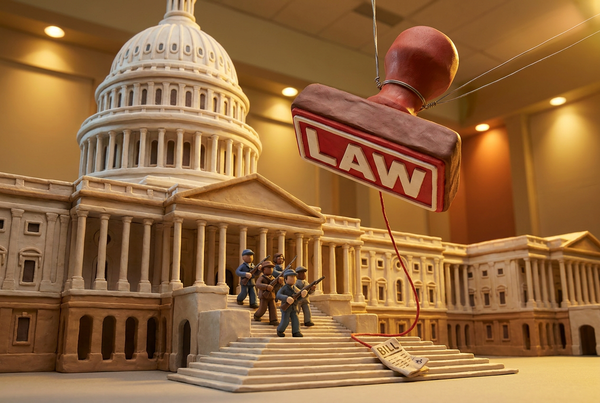
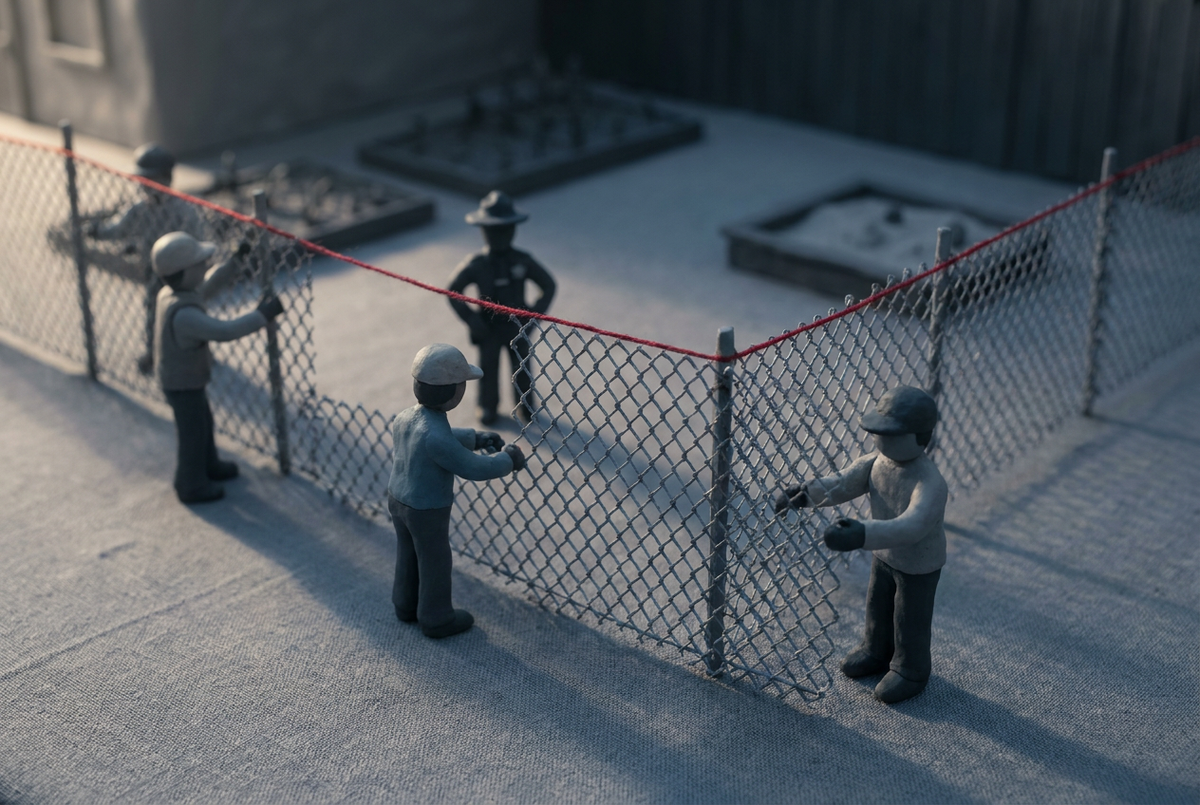
The fence went up before dawn on May 15, 1969. University of California work crews, backed by Alameda County sheriff's deputies, rolled in to enclose a vacant lot on Berkeley's south side that students, activists, and neighborhood residents had spent the past three weeks turning into a park, benches, flowers, a children's sandbox, built on land UC had bulldozed for student housing and then left sitting empty for years. By afternoon the crowd that gathered to protest the fence had swelled into the thousands, and Alameda County deputies opened fire on them with shotguns. James Rector, watching from a rooftop on Telegraph Avenue, took a blast of buckshot to the abdomen and died four days later. Alan Blanchard, a carpenter nearby, caught a load of birdshot directly in the face and was permanently blinded. Governor Ronald Reagan, who had ordered the fence built over the objections of the Berkeley City Council, called in the National Guard. Five days later a Guard helicopter sprayed CS gas across the entire campus, sickening children at a nearby elementary school who had nothing to do with any of it.
This is the day Sacramento likes to forget and Berkeley has never stopped commemorating. It is also, less obviously, the day the modern cost of an American public university degree started to take its current shape.
The Promise That Already Had an Asterisk
California had promised its residents a free university education. The promise had a loophole built in from the start, and Reagan found it.
The commitment went back to 1960, when California's Master Plan for Higher Education set the terms that built the UC and state college systems into the envy of the country: instruction would be tuition-free for state residents, full stop. The asterisk was baked in from an earlier era. Since 1921, campuses had charged modest "incidental fees," officially for non-instructional costs like health services and student activities, kept carefully separate from "tuition" in the state's accounting. For four decades that distinction was mostly cosmetic, a few dollars a year, barely worth litigating.
Reagan arrived in Sacramento in January 1967 already running against Berkeley. His 1966 campaign had made the Free Speech Movement and the general spectacle of student unrest into a closing argument against Pat Brown's governorship, and three days after his inauguration the UC Board of Regents fired university president Clark Kerr, the architect of the Master Plan itself, in a vote widely understood as a down payment on that campaign promise. Reagan's first budget asked the legislature for a 10 percent cut to UC funding and floated actual tuition for the first time in the system's history. The legislature balked at tuition outright, but it let him raise the incidental fee instead, the same mechanism that had sat quietly on the books since 1921, now repurposed as the pressure valve for a fight the state wasn't ready to have directly.
Meese Gets His First Job
The hire that would outlast the governorship, the presidency, and most of the men who made it.
Reagan filled out his new administration with a young Alameda County deputy district attorney named Edwin Meese III1, recommended by a state senator who'd watched him work. Meese took the title of legal affairs secretary in 1967 and by 1969 had been promoted to chief of staff, just in time for People's Park. It was Meese who advised Reagan to declare a state of emergency in Berkeley over the City Council's objection, the decision that brought in the National Guard and kept troops occupying the city for two weeks. Local Republican clubs later named him one of the state's "Outstanding Young Men" for it. It is the first entry in a career that runs through the governor's office, the 1980 campaign, and eventually the Attorney General's desk during Iran-Contra, and at every stop the instinct on display at Berkeley in 1969 is recognizably the same one.
Sweaty's Corner doesn't have a marketing budget or an algorithm pushing it into anyone's feed. It has readers who share it. If this one landed, sending it to someone who'd get something out of it — or subscribing so the next one finds you directly — genuinely moves the needle.
The Bloodbath Quote
Running for reelection on the thing he'd already done.
Reagan campaigned for a second term in 1970 on exactly the posture People's Park had put on display. Asked about the ongoing campus unrest, he told a gathering of California growers that if the state's university protesters wanted a confrontation, "if it takes a bloodbath, let's get it over with. No more appeasement." The line was not a slip. It was the same argument he'd been making since 1966, that the state's mistake had been treating Berkeley gently, now delivered with a year of actual bloodshed behind it to make the threat concrete.
The Confession
The quote that says out loud what the fee increases were actually for.
The clearest statement of the underlying logic came not from Reagan but from his own education adviser. At an October 29, 1970 press conference, Roger Freeman, who had been urging California to raise fees since 1961 and was by then advising Reagan's reelection campaign on education funding, told reporters the state risked "producing an educated proletariat."
"That's dynamite! We have to be selective on who we allow to go through higher education."
Freeman's worry wasn't about budgets. It was about supply, too many credentialed people chasing too few of the jobs a degree was supposed to guarantee, and the volatility he assumed would follow. Pricing people out was not a side effect of fiscal responsibility. For Freeman, it was closer to the point. The mechanism this fee increase actually ran on, gatekeeping who got access to a public good rather than simply funding it, would outlive Freeman, outlive Reagan's governorship, and eventually produce a national student debt load that nobody in Sacramento in 1970 could have priced into a press conference. That's a bigger story than this episode has room for, and it gets its own reckoning another day.
The Fee Goes Through
The $150 line item that broke the Master Plan's central promise.
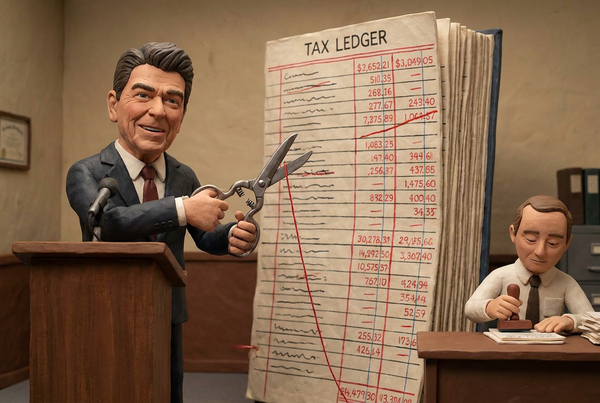
By 1970 the incidental fee Reagan inherited had become something else entirely: a $150 "Educational Fee," explicitly new, explicitly tied to instructional costs the 1960 Master Plan had promised would stay free. The state kept calling it a fee rather than tuition, a distinction that had covered a few dollars in 1921 and now strained to cover a number growing far faster than inflation. By 1975, the year Reagan left office, UC resident students were paying $600 a year. By 1985, $1,326. The fee that was never supposed to exist kept a separate name for decades after it had plainly become the thing the Master Plan said would never happen.
The stated case for all of this was fiscal discipline: a state government living within its means, students bearing a fairer share of a service they personally benefited from. The mechanism underneath it, in Freeman's own words, was about controlling who got to show up in the first place, with the National Guard standing by in case the people who did show up made too much noise about it. California never restored the free-tuition promise it broke in 1970. It just kept renaming the thing that replaced it.
Keep the lights on
Like what you've read, but not able to switch to paid? Why not buy me a coffee instead! All money goes to help defray the expense of running the site.

1 - Edwin Meese III is worthy of a This Fucking Guy treatment, what an absolute shitbag of a human being. He will be a fixture in the rest of this series